

 Jul 18, 2026
 5 min read
Vertigo Explained: Causes, Symptoms, and the Path to Lasting Relief
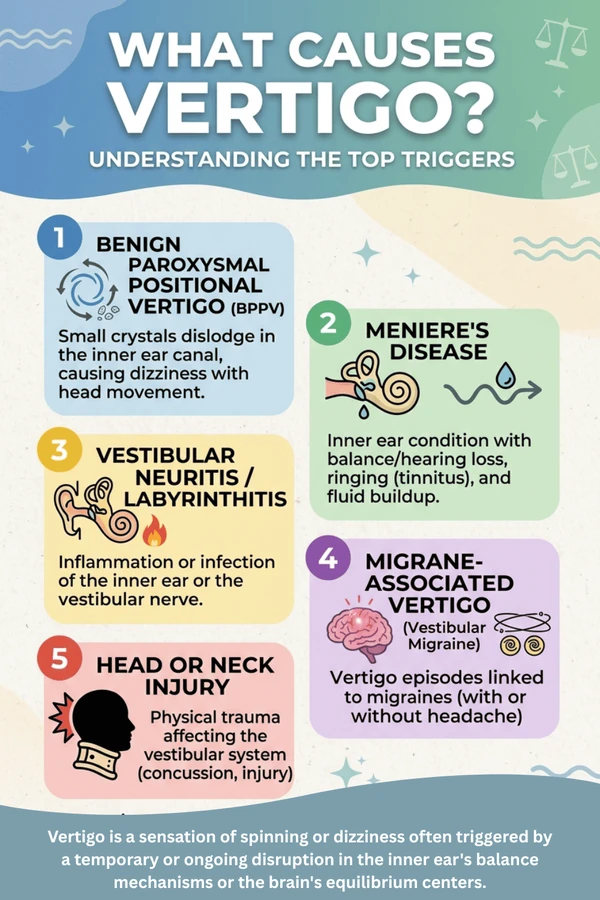
Understanding Vertigo: Causes, Symptoms, and Path to Relief
Imagine waking up, sitting on the edge of your bed, and suddenly feeling like the entire room is spinning violently around you. You are perfectly still, yet your brain is convinced you are on a runaway rollercoaster. This disorienting, often frightening sensation is known as vertigo.
Vertigo is not a disease in itself; rather, it is a symptom of an underlying issue, usually rooted in the intricate mechanics of the inner ear or the central nervous system. Because it disrupts your primary sense of balance, understanding its mechanisms is the first step toward reclaiming your stability.
What Causes the World to Spin?
To understand vertigo, it helps to understand how we maintain balance. The brain constantly processes signals from the eyes, sensory nerves in the limbs, and the vestibular system (a collection of fluid-filled canals and sensors located deep inside the inner ear). If one part of this network sends conflicting data, the brain gets confused, resulting in a false sensation of motion.
Vertigo is generally categorized into two main types based on its origin:
1. Peripheral Vertigo (Inner Ear Issues)
This is by far the most common type, accounting for the vast majority of cases. It occurs when there is a malfunction in the inner ear's balance organs.
- Benign Paroxysmal Positional Vertigo (BPPV): The most frequent cause of vertigo. It happens when tiny calcium carbonate crystals (otoconia), which are normally embedded in one part of the inner ear, break loose and migrate into the fluid-filled semicircular canals. When you move your head, these floating crystals shift the fluid abnormally, triggering sudden, brief episodes of intense spinning.
- Meniere’s Disease: A chronic disorder characterized by an abnormal buildup of fluid pressure within the inner ear. It causes unpredictable, severe episodes of vertigo that can last anywhere from 20 minutes to several hours.
- Vestibular Neuritis or Labyrinthitis: This is an inflammation of the vestibular nerve (which sends balance signals to the brain), usually caused by a viral infection like a common cold or flu. It causes a sudden, intense wave of vertigo that can last for days.
2. Central Vertigo (Brain Issues)
This type originates in the central nervous system—specifically the brainstem or cerebellum, which process balance information.
- Vestibular Migraines: A variant of migraines where the primary symptom is dizziness or vertigo rather than a severe headache.
- Acoustic Neuroma: A benign (non-cancerous) tumor that grows on the vestibular nerve, gradually compressing it over time.
- Neurological Conditions: Conditions that affect brain tissue, such as multiple sclerosis or a stroke involving the back of the brain, can disrupt balance pathways.
Recognizing the Symptoms
While a spinning sensation is the hallmark feature, vertigo rarely travels alone. Depending on the root cause, a person might experience a cluster of related symptoms:
- Physical Sensations: A feeling of tilting, swaying, unsteadiness, or being pulled in one direction.
- Autonomic Responses: Nausea, vomiting, and cold sweats, caused by the brain's severe confusion over its spatial orientation.
- Auditory Disturbances: A persistent ringing or buzzing in the ears (tinnitus), a feeling of fullness or pressure inside the ear, or temporary hearing loss (common in Meniere's disease).
- Visual Triggers: Abnormal or jerking eye movements (nystagmus) as the eyes attempt to adjust to the false sense of motion.
Options for Treatment and Relief
The strategy for resolving vertigo depends entirely on what is causing it. For many, the condition resolves on its own as the body adapts, but targeted medical interventions can significantly accelerate recovery.
Physical Therapy and Maneuvers
For BPPV, medication is rarely the answer. Instead, mechanical problems require mechanical solutions.
- The Epley Maneuver: A healthcare professional guides the patient through a specific sequence of head and body movements. This targeted positioning uses gravity to guide the loose calcium crystals out of the sensitive semicircular canals and back to where they belong, often providing immediate relief.
- Vestibular Rehabilitation Therapy (VRT): For chronic balance issues or post-viral nerve damage, this specialized form of physical therapy trains the brain to use alternative visual and sensory cues to compensate for a weakened inner ear.
Medical Options
When vertigo is caused by inflammation, fluid buildup, or migraines, target-specific medications can help manage the condition:
- Vestibular Suppressants: Medications like meclizine, dimenhydrinate, or low-dose diazepam can temporarily dull the inner ear's signals to reduce acute spinning and nausea. These are typically used only for short periods, as long-term use can delay the brain’s natural ability to adapt.
- Anti-nausea Medications: If severe vomiting accompanies the episodes, antiemetics (such as promethazine or ondansetron) are frequently prescribed to keep the patient comfortable and hydrated.
- Diuretics and Steroids: For Meniere's disease, a doctor may prescribe a diuretic (water pill) to lower fluid retention and pressure in the inner ear. If the cause is an acute viral infection causing nerve inflammation, a short course of oral steroids may reduce swelling.
Prevention and Lifestyle Modifications
While you cannot always prevent an underlying inner ear infection or BPPV crystal displacement, you can dramatically lower the frequency of episodes and protect yourself from injury during a flare-up.
- Modify Your Movement: Avoid sudden head movements, looking straight up rapidly, or bending over too quickly. When waking up, sit on the edge of the bed for a minute before standing up to let your blood pressure and balance system adjust.
- Adjust Your Sleeping Setup: Sleep with your head slightly elevated on two or more pillows. This helps prevent loose crystals from shifting into the balance canals overnight.
- Dietary Changes (For Meniere's Disease): Restricting dietary sodium (salt) is highly effective because salt encourages fluid retention, which directly increases inner ear pressure. Reducing caffeine and alcohol intake can also stabilize fluid levels.
- Manage Stress: High stress triggers the release of hormones that can alter inner ear microcirculation and provoke vestibular migraines. Practicing mindfulness, deep breathing, or yoga can keep these triggers at bay.
When to Seek Immediate Medical Attention:
While most vertigo episodes are benign, sudden dizziness accompanied by double vision, slurred speech, numbness, weakness in the limbs, or difficulty swallowing can indicate a stroke or serious neurological event. If these "red flag" symptoms occur, seek emergency medical care immediately.




Comments (0)
Leave a Reply
Log in to post a comment.