

 Jul 01, 2026
 4 min read
Nose vs Mouth Breathing: What the Nose Does, and Why Chronic Mouth Breathing Needs a Look
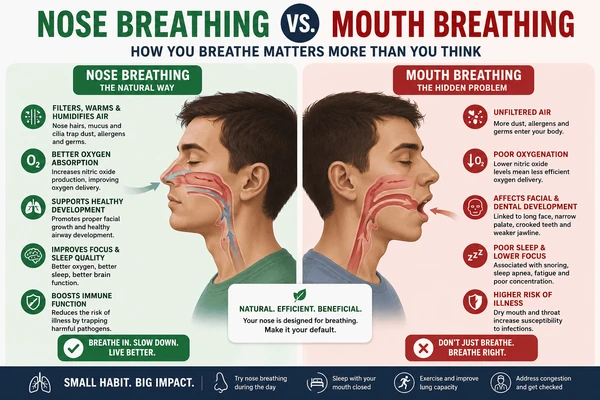
The nose is more than an air hole. In the short distance from the nostrils to the back of the throat, inhaled air is filtered, warmed close to body temperature and almost fully humidified. Coarse particles are trapped by nasal hairs and mucus. The sinuses also release nitric oxide, a gas that kills some microbes and helps open blood vessels in the lungs. Air breathed through the mouth skips most of this. That doesn't make mouth breathing harmful in itself. Everyone switches to it during hard exercise. But habitual mouth breathing, especially at night, is often a sign that something is blocking the nose.
Why people mouth-breathe
Most chronic mouth breathers do it because the nose doesn't let enough air through. Common causes include:
- Allergic rhinitis (hay fever or year-round allergy to dust mites, pets or mould), which swells the nasal lining
- A deviated septum, where the wall between the nostrils is bent
- Nasal polyps, soft swellings linked to chronic sinusitis, asthma and sometimes aspirin sensitivity
- Enlarged adenoids and tonsils, the most common cause in children
- Rebound congestion from decongestant sprays. Using xylometazoline or oxymetazoline sprays for more than about a week can lead to a permanently blocked nose that only clears with more spray. This is a very common, avoidable problem.
- Pregnancy, which often causes nasal congestion through hormonal changes

Breathing through the mouth at night dries the mouth and goes hand in hand with snoring. Photo: Kampus Production / Pexels
What habitual mouth breathing can do
Dry mouth and dental problems. Saliva protects teeth and gums. A mouth left open at night dries out, raising the risk of tooth decay, gum inflammation and bad breath. Waking with a very dry mouth or sore throat is a common clue.
Snoring and disturbed sleep. Mouth breathing during sleep goes hand in hand with snoring. In some people it is part of obstructive sleep apnoea, where the throat repeatedly collapses during sleep, cutting off breathing. Signs include loud snoring, gasping or pauses in breathing noticed by a partner, unrefreshing sleep, morning headaches and daytime sleepiness. Untreated sleep apnoea raises blood pressure and increases the risk of accidents. It is very treatable (see the NHS sleep apnoea guide).
In children, persistent mouth breathing and snoring from large adenoids and tonsils can cause poor sleep, daytime tiredness, poor concentration, behaviour problems and sometimes slow growth. There is also evidence that long-standing mouth breathing in childhood can affect how the face and jaw develop. A child who snores most nights or breathes through the mouth all the time should be assessed. Removing the adenoids and tonsils often solves the problem.
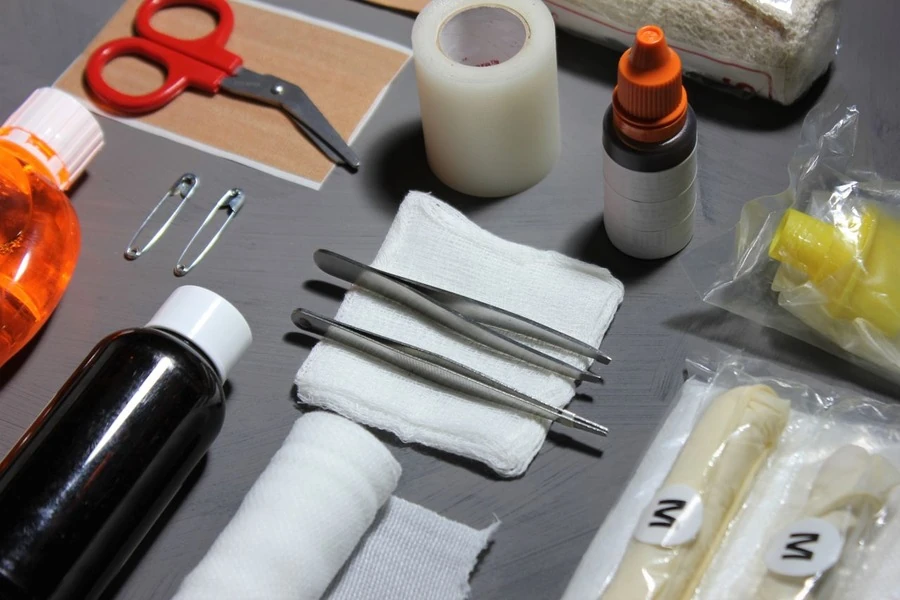
Mouth taping is promoted online, but the evidence for it is thin. Photo: Roger Brown / Pexels
Claims to treat with caution
Nose breathing is often promoted online as a way to boost oxygen levels, energy, athletic performance and even weight loss. In healthy people at rest, oxygen levels are normal with either route, and evidence for most of these wider claims is thin.
Mouth taping, putting tape over the lips at night to force nose breathing, became a social media trend. A 2025 review of the small studies available found little reliable evidence of benefit. It warned that taping could be dangerous for people whose noses are partly blocked, or who have undiagnosed sleep apnoea, because it could make breathing harder rather than easier. If you snore or mouth-breathe at night, get the cause checked instead of taping over it.
Improving nasal breathing
- Treat allergies. A steroid nasal spray (fluticasone, mometasone, beclometasone) used daily is the most effective treatment for allergic rhinitis and nasal polyps. It takes one to two weeks to work fully. Aim the spray slightly outwards, not at the septum. Non-drowsy antihistamines help itching and sneezing.
- Rinse with salt water. Saline rinses clear mucus and allergens, using sterile or boiled and cooled water.
- Limit decongestant sprays to five to seven days. If you're already dependent on one, a steroid spray can help you wean off it. A pharmacist can advise.
- Nasal strips or dilators may help some people with a narrow nasal entrance to breathe more easily at night.
- Surgery to straighten a deviated septum, reduce swollen nasal tissue or remove polyps helps when medicines aren't enough.
- Practise breathing through the nose during the day if it has become a habit, once any blockage has been treated.
See a doctor if
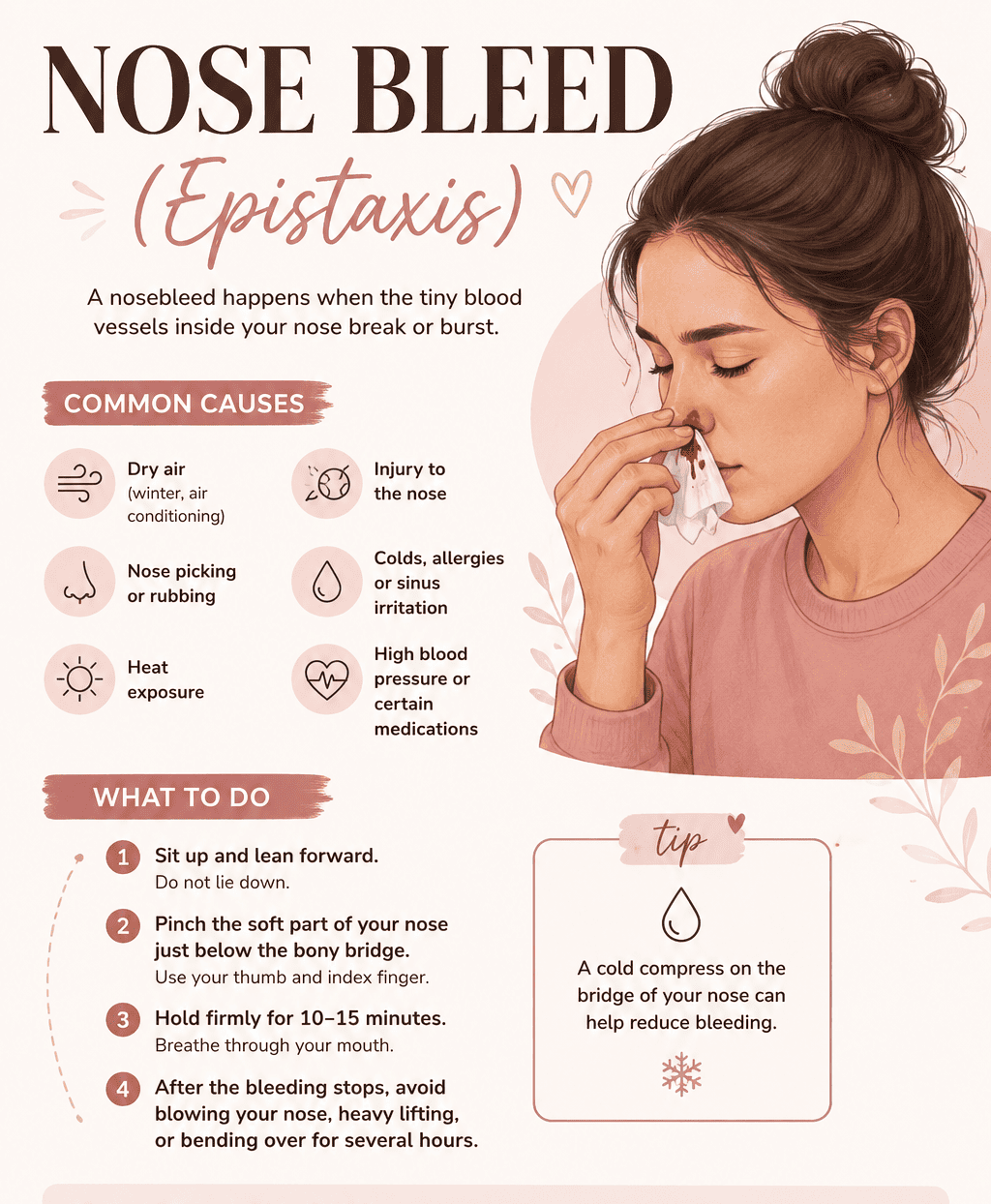
- your nose is persistently blocked on one side, especially with bleeding or a reduced sense of smell
- you snore loudly with pauses in breathing or daytime sleepiness
- a child snores most nights or always breathes through the mouth
- you rely on decongestant sprays to breathe
Sources
- NHS, "Sleep apnoea". https://www.nhs.uk/conditions/sleep-apnoea/
- Lundberg J, Farkas-Szallasi T, Weitzberg E, Rinder J et al., "High nitric oxide production in human paranasal sinuses", Nature Medicine 1 (1995): 370-373. https://doi.org/10.1038/nm0495-370



Comments (0)
Leave a Reply
Comments are moderated. Please read our Comment Policy before posting.
Log in to post a comment.