

 Jun 06, 2026
 4 min read
Living With Asthma: Understanding the Condition and Taking Control
Asthma: Understanding the Chronic Breathing Condition
Asthma is a long-term disease that affects the airways in the lungs.
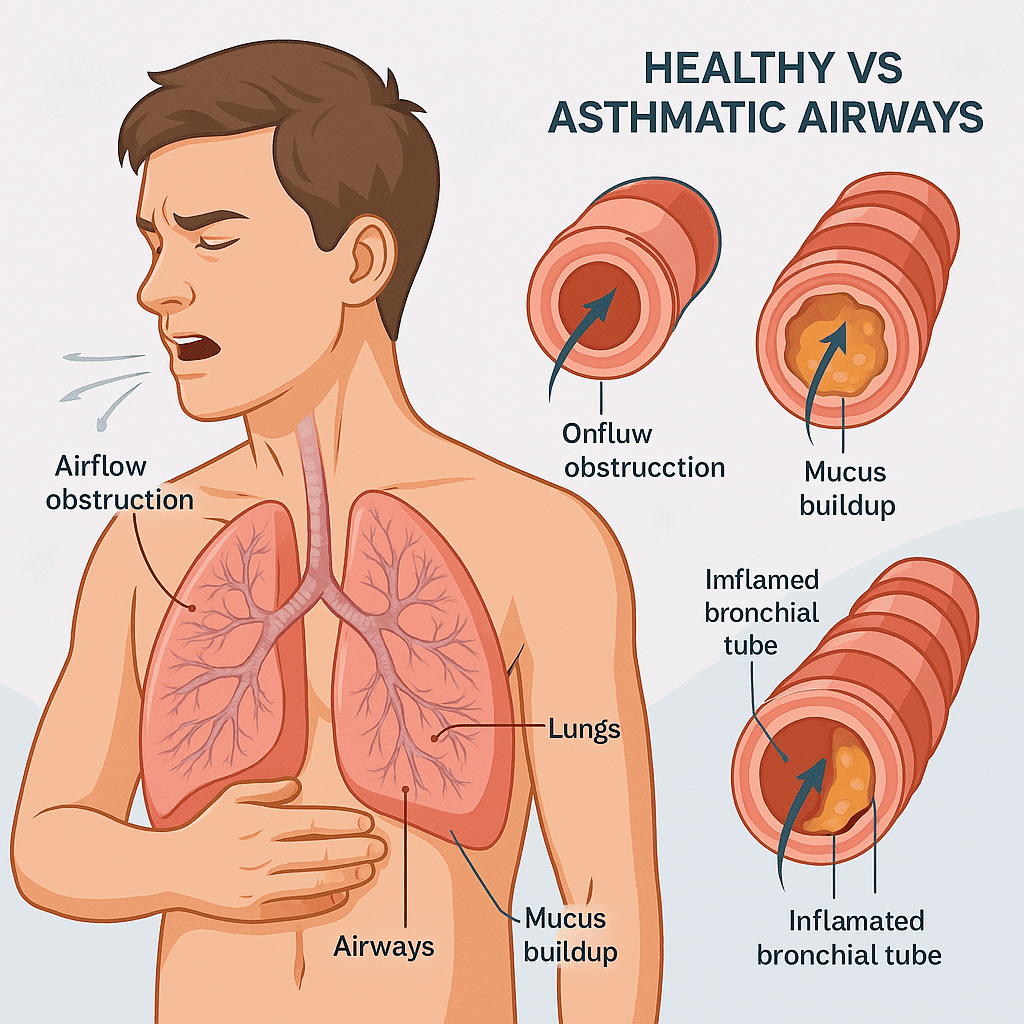
When someone with asthma is exposed to certain triggers, the airways become swollen, narrow, and produce extra mucus. This makes it hard to breathe and can lead to a range of symptoms, from mild to severe, which may need emergency care.
What Happens During an Asthma Attack?
In people without asthma, air flows easily through open airways.
For those with asthma, certain things can cause the muscles around the airways to tighten. At the same time, the lining of the airways becomes inflamed and makes more mucus. This reduces airflow and causes breathing problems.
Different Types of Asthma
Asthma can appear in many forms, such as:
Allergic Asthma:
Triggered by substances like pollen, pet dander, or dust mites.
Cough-Variant Asthma:
The main or only symptom is a persistent cough.
Exercise-Induced Asthma:
Physical activity causes breathing issues.
Occupational Asthma:
Caused by exposure to harmful substances at work.
Asthma-COPD Overlap Syndrome (ACOS):
A condition where asthma and chronic obstructive pulmonary disease (COPD) occur together.
Common Symptoms of Asthma
People who have asthma may experience:
- Trouble breathing
- Wheezing or a whistling sound when breathing
- A feeling of tightness, discomfort, or pressure in the chest
- Persistent coughing, especially at night or in the morning
These symptoms may happen regularly or only during asthma flare-ups.
What Causes Asthma?
The exact cause of asthma is not fully understood, but several factors can increase someone's risk, such as:
- A personal or family history of allergies, eczema, or asthma
- Being exposed to secondhand smoke as a child
- Contact with environmental pollutants or harmful chemicals
- Frequent respiratory infections in early life
Common Asthma Triggers
Many things can cause asthma symptoms, including:
Allergens
- Pollen
- Dust mites
- Pet dander
- Mold spores
Environmental factors
- cold weather
- air pollution
- wildfire smoke
- Strong odors, perfumes, and cleaning products
Lifestyle factors
- exercise
- stress, and emotional feelings
- Respiratory infections
- Smoking and secondhand smoke
Some triggers cause immediate symptoms, while others may take hours or even days to lead to an asthma attack.
Potential Complications
If asthma is not well managed, it can lead to serious attacks.
A dangerous condition called status asthmaticus may occur when symptoms don’t respond to usual treatments. Without urgent medical care, this can become life-threatening due to a lack of oxygen.
How Asthma Is Diagnosed
Doctors diagnose asthma by looking at symptoms, medical history, and doing lung function tests.
Common tests used for diagnosis include:
Spirometry:
Measures how well air moves in and out of the lungs.
Allergy Testing:
Helps identify specific allergens that may trigger asthma.
Blood Tests:
Can check for markers like eosinophils and IgE levels.
Chest X-rays or CT Scans:
Help rule out other lung conditions.
Peak Flow Measurement:
Monitors how narrow the airways are.
Asthma Treatment and Management
Although asthma can’t be cured, it can usually be controlled with the right treatment.
Treatment options include:
Maintenance Inhalers:
These usually contain inhaled corticosteroids to reduce inflammation.
They may also include bronchodilators to open the airways.
Rescue Inhalers:
These fast-acting medications help during an asthma attack by opening the airways, like albuterol.
Nebulizers:
These devices deliver medication in a fine mist through a mask.
Some people use them instead of inhalers for certain medicines.
Leukotriene modifiers:
These daily pills can help reduce symptoms and lower the risk of attacks.
Oral steroids:
May be used for a short time during flare-ups.
Antihistamines:
These can be prescribed for allergic asthma, such as cetirizine, loratadine, or fexofenadine.
Biologic Therapy:
Medications like monoclonal antibodies may help with severe asthma.
When Should I See My Healthcare Provider?
You should talk to your healthcare provider if you are having frequent asthma attacks or if your symptoms are hard to manage.
Make sure you understand your asthma action plan and know when to seek emergency help.
If you are having a severe asthma attack, use your rescue inhaler, then call your local emergency number if you experience any of the following:
- Anxiety or panic
- Bluish, whitish, or grayish fingernails, lips, or gums
- Chest pain or pressure
- Coughing that won’t stop
- Severe wheezing while breathing
- Trouble talking or swallowing
- A pale, sweaty face
- Rapid breathing
What Can I Do to Feel Better?
There are steps you can take to reduce or avoid asthma symptoms.
These include:
- Avoiding triggers whenever possible. Keeping a symptoms journal can help you identify what makes your symptoms worse.
- Staying physically active at a level that's right for you.
- Ask your provider what they recommend. A pulmonary rehabilitation program might be helpful.
- Not smoking or vaping.
Letting your provider know if you have trouble using inhalers or taking your medication as prescribed.




Comments (0)
Leave a Reply
Log in to post a comment.