

 Jun 01, 2026
 4 min read
Epistaxis (Nosebleed): Causes, Symptoms, First Aid & Prevention
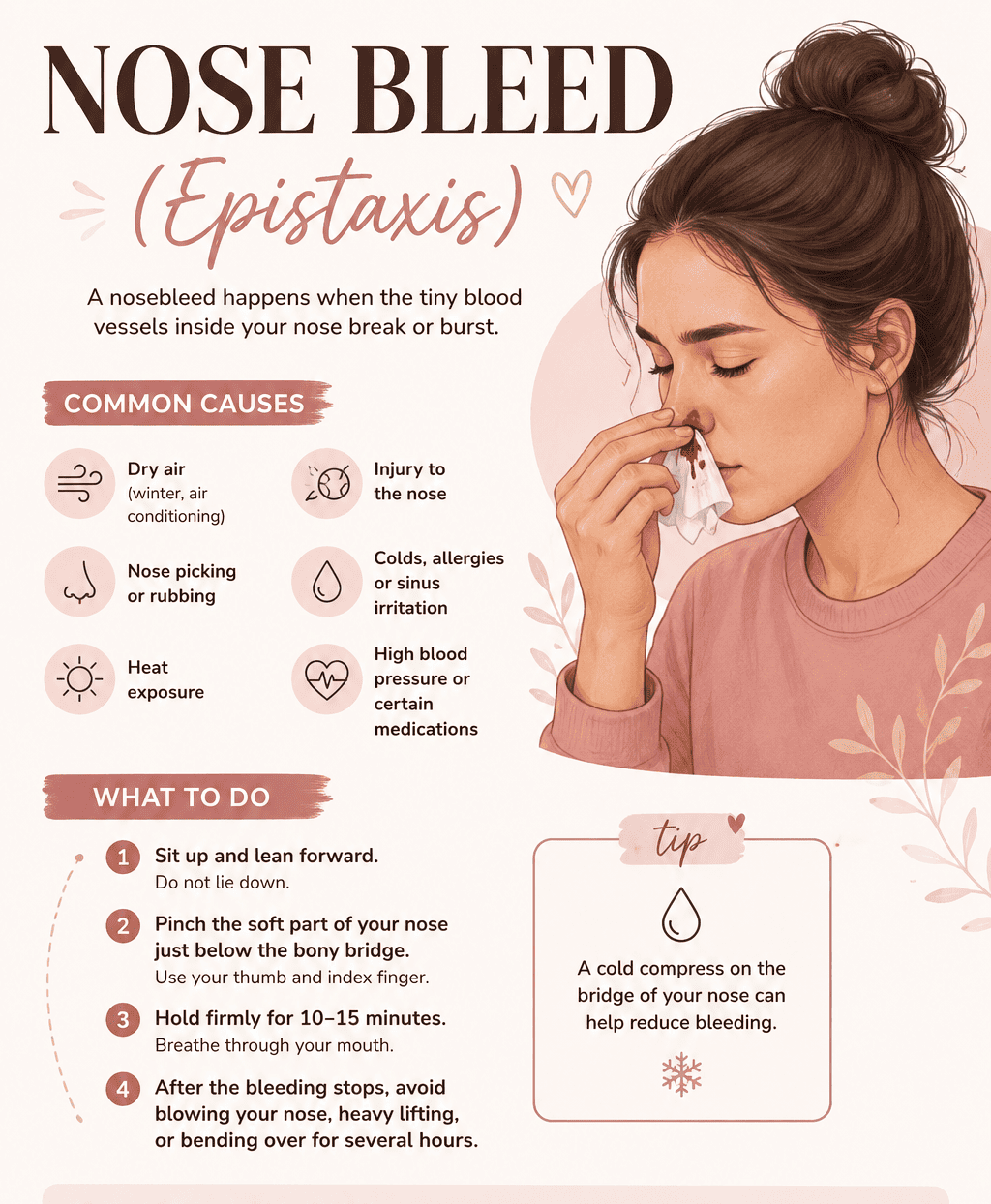
Nosebleeds Explained (Epistaxis)
Causes, Warning Signs & Fast Relief Tips
Epistaxis, commonly known as a nosebleed, occurs when a blood vessel inside the nose ruptures and starts to bleed. While seeing blood from the nose can be frightening, most nosebleeds are not serious and can usually be treated at home.
Nosebleeds are quite common in children because the blood vessels in their noses are more sensitive and can easily break.
Usually, children outgrow this condition as they grow older.
Why Do Nosebleeds Happen?
Nosebleeds happen when the tiny blood vessels inside the nose, which are close to the surface, get damaged.
This can be due to irritation, dryness, or injury, leading to bleeding.
Common Causes of Nosebleeds
- - Dry or warm air that causes the nasal lining to dry out
- - Nose picking
- - Colds, sinus infections, or infections of the adenoids
- - Allergies and hay fever
- - Frequent coughing or sneezing
- - Injury from a bump, fall, or accident
- - Foreign objects in the nose
- - Certain bleeding or clotting disorders
- - Intense physical activity or exercise
Signs and Symptoms of a Nosebleed
A person having a nosebleed may experience:
- - Bleeding from one or both nostrils
- - A feeling of blood running down the back of the throat
- - Frequent swallowing because of the blood drainage
- - Mild dizziness or discomfort if the bleeding lasts a long time
First Aid: How to Stop a Nosebleed
Follow these simple steps to control a nosebleed safely:
Step 1: Stay Calm
Reassure the person, especially children.
Anxiety and crying can make the bleeding worse.
Step 2: Sit Upright and Lean Forward
Keep the head slightly tilted forward.
Avoid leaning back, as this may cause blood to flow into the throat and stomach.
Step 3: Pinch the Soft Part of the Nose
Use your thumb and index finger to firmly press the soft part of the nostrils together.
Step 4: Hold for 10 Minutes
Apply continuous pressure for at least 10 minutes without checking too often.
Step 5: Breathe Through the Mouth
Encourage slow breathing through the mouth while the pressure is applied.
Step 6: Check the Bleeding
After 10 minutes, gently release the pressure.
If the bleeding continues, repeat the steps and seek medical attention.
Aftercare: What to Avoid
Once the bleeding has stopped:
- - Do not blow your nose for at least 15 minutes.
- - Avoid picking your nose for the rest of the day.
- - Try not to sniff excessively.
- - Avoid strenuous activities for several hours.
These steps help the blood clot properly and lower the risk of another nosebleed.
When Should You See a Doctor?
You should seek medical help immediately if:
- - The bleeding lasts longer than 20 minutes.
- - The bleeding is very heavy.
- - Nosebleeds happen frequently.
- - The nosebleed follows a serious injury.
- - The person feels weak, dizzy, or faint.
- - There is a known bleeding or clotting disorder.
How Doctors Diagnose Frequent Nosebleeds
If nosebleeds happen regularly, a healthcare provider may ask:
- - How long the bleeding lasts
- - How much blood is lost
- - How often nosebleeds occur
- - Whether one or both nostrils are affected
They may also ask about:
- - Current medications, including aspirin and blood thinners
- - Allergy and cold medications
- - Family history of bleeding disorders
- - Alcohol or recreational drug use
Additional tests may be needed if an underlying condition is suspected.
Frequent Nosebleeds in Children
Children who have repeated nosebleeds should be seen by a doctor.
Possible causes may include chronic irritation, allergies, infections, or fragile blood vessels.
Treatment may involve:
- - Antibiotic ointments for infections
- - Moisturizing nasal creams
- - Allergy management
- - Other treatments depending on the cause
In rare cases, repeated blood loss can lead to anaemia.
Can You Drink Water After a Nosebleed?
Yes.
Drinking water after a nosebleed is safe and recommended.
Sometimes, a small amount of blood may travel down the throat into the stomach, which might cause mild nausea.
Drinking water, juice, or other non-caffeinated drinks can help you feel more comfortable. Drinking water does not cause or restart a nosebleed.
Tips to Prevent Nosebleeds
- - Keep the inside of your nose moist with saline spray
- - Use a humidifier in dry weather
- - Avoid picking or rubbing your nose
- - Treat allergies promptly
- - Wear protective gear during sports and activities
- - Stay hydrated throughout the day
Key Takeaways
✔ Nosebleeds (epistaxis) are common and usually not serious.
✔ Most nosebleeds can be managed with simple first-aid methods.
✔ Frequent, severe, or prolonged nosebleeds should be checked by a healthcare professional.
✔ Staying hydrated and keeping the nasal passages moist can help prevent future nos
ebleeds.
A nosebleed may seem alarming, but in most cases, it is a temporary issue that can be quickly and effectively managed with proper care.




Comments (0)
Leave a Reply
Log in to post a comment.