

 Jan 22, 2025
 4 min read
How to Clear Mucus and Phlegm, and Which Food Myths to Ignore

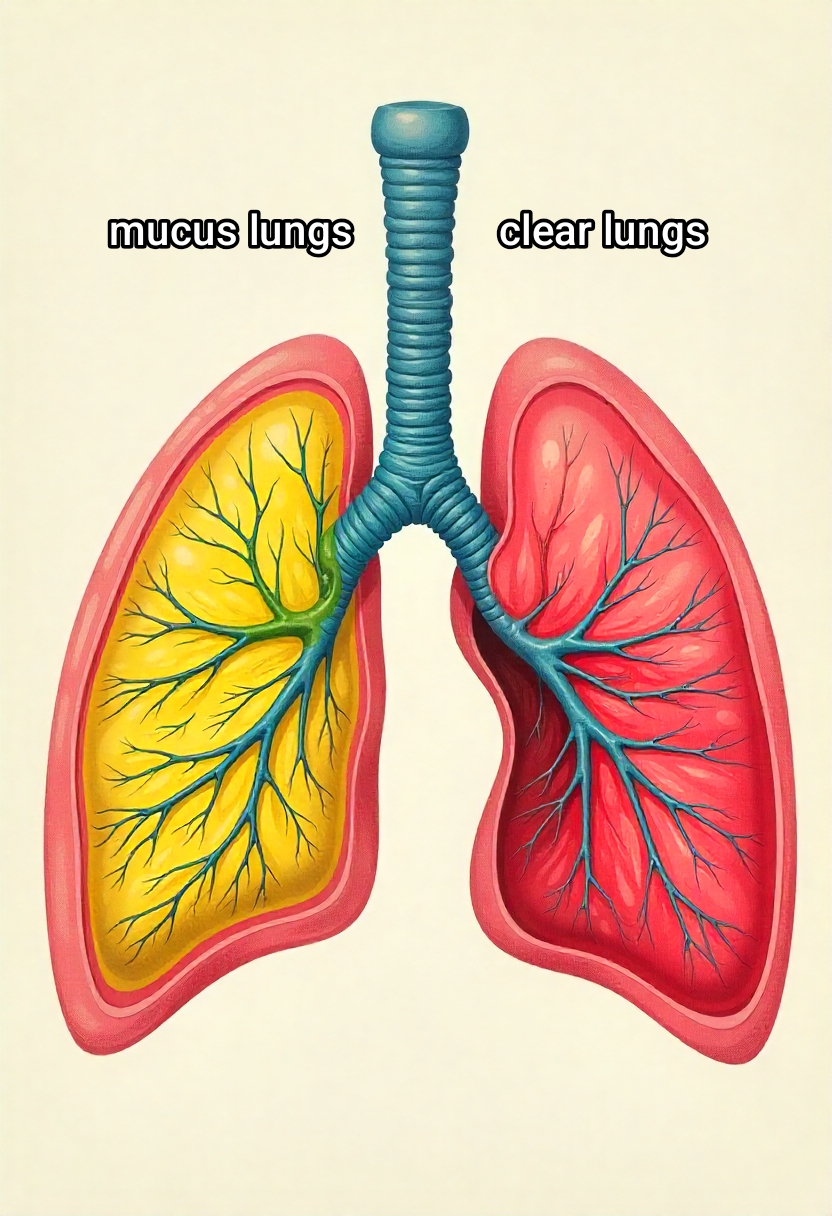
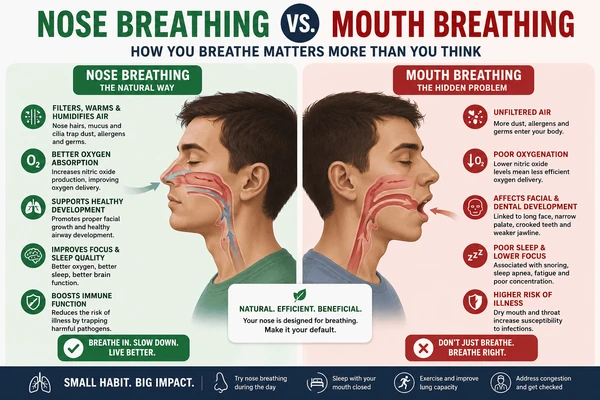
The nose, sinuses and airways make mucus all the time. Most of it is swept up to the throat by tiny hairs called cilia and swallowed without anyone noticing. You only notice it when there is too much, when it gets thick, or when it drips down the back of the throat. Where it comes from decides what will clear it.
Throat or chest?
Mucus in the throat, with constant throat clearing, is most often postnasal drip: mucus from the nose and sinuses running down the back of the throat. Hay fever and other allergies, a lingering cold, sinusitis and irritants such as smoke are the usual causes. Acid reflux reaching the throat produces a very similar feeling, even when there is no heartburn.
Phlegm coughed up from the chest comes from the airways of the lungs. Short episodes follow colds and chest infections. Phlegm on most days for months suggests a long-term condition such as chronic bronchitis (part of COPD, usually from smoking), asthma or bronchiectasis.
Things that help
- Fluids. Being well hydrated keeps mucus thinner. Warm drinks are especially soothing for a sore throat.
- Steam. Breathing steam from a shower or a bowl of hot water can loosen mucus for a while. Never use a bowl of very hot water with children, as scalds from tipped bowls are a common injury.
- Salt-water nasal rinses. For postnasal drip and sinus problems, rinsing the nose with saline from a squeeze bottle or rinse pot has good evidence. Use boiled and cooled or sterile water, never straight from the tap.
- Honey. A Cochrane review found that honey probably relieves cough in children better than no treatment, and about as well as some cough syrups. Never give honey to babies under one year old, because of the risk of infant botulism.
- Clearing the chest. For phlegm deep in the chest, a "huff" works better than a hard cough: take a medium breath, then breathe out forcefully with the mouth open, as if fogging a mirror. Walking and other activity also help move phlegm.
Ginger and honey tea, and warm water with lemon, are pleasant and soothing. There is little evidence that they shift mucus any better than other warm drinks.

In a study of adults given a cold virus, how much milk they drank made no difference to their mucus. Photo: Dina Nasyrova / Pexels
Do some foods cause mucus?
Milk is the food most often blamed, but the evidence doesn't support it. In a study of adults deliberately infected with a cold virus, the amount of milk they drank made no difference to the weight of mucus they produced. Milk can leave a coating in the mouth that feels thicker, which may explain the belief. Cutting out dairy without need removes a good source of calcium and protein.
The same goes for bananas, rice and chocolate. There is no good evidence that they increase mucus. If a particular food really does seem to make your throat feel worse, avoiding it is harmless, but there's no need to cut out whole food groups on general principle.
Medicines from the pharmacy
Expectorants such as guaifenesin are meant to make phlegm easier to cough up. The evidence is modest. Mucolytics such as carbocisteine and acetylcysteine thin mucus and are prescribed for some people with COPD, where they slightly reduce flare-ups.
Decongestant nasal sprays (xylometazoline, oxymetazoline) clear a blocked nose quickly. Use them for no more than five to seven days, because longer use causes rebound congestion that is worse than the original problem. Decongestant tablets containing pseudoephedrine can raise blood pressure and aren't suitable for everyone. Older, sedating antihistamines can dry and thicken secretions. Non-drowsy antihistamines or steroid nasal sprays are better for allergy-driven postnasal drip.
A word on liquorice. Liquorice root has a long history as a cough remedy. Taken regularly in large amounts, though, its active compound glycyrrhizin raises blood pressure and lowers potassium. People with high blood pressure or heart problems, and those taking diuretics or digoxin, should avoid it. "Deglycyrrhizinated" (DGL) products don't have this effect.
Does the colour matter?
Yellow or green phlegm is common in ordinary viral colds. The colour comes from white blood cells, not necessarily from bacteria, so on its own it doesn't mean you need antibiotics. More worrying signs are fever that doesn't settle, breathlessness, or feeling worse after starting to improve.
See a doctor if
- you cough up blood
- a cough lasts more than three weeks
- you are short of breath, wheezy or have chest pain
- you have night sweats or weight loss you can't explain
- you have a high fever, or symptoms that improved and then got worse
- you smoke, or used to, and your cough has changed
The NHS cough guide covers when to seek urgent help.
Sources
- Pinnock C, Graham N, Mylvaganam A, Douglas R, "Relationship between Milk Intake and Mucus Production in Adult Volunteers Challenged with Rhinovirus-2", American Review of Respiratory Disease 141 (1990): 352-356. https://doi.org/10.1164/ajrccm/141.2.352
- NHS, "Cough". https://www.nhs.uk/symptoms/cough/
- NHS, "Chest infection". https://www.nhs.uk/conditions/chest-infection/



Comments (0)
Leave a Reply
Comments are moderated. Please read our Comment Policy before posting.
Log in to post a comment.