

 Jan 24, 2025
 4 min read
Collagen and Ageing Skin: What Actually Protects It

Collagen makes up most of the dry weight of the skin's deeper layer, the dermis. It forms the springy framework that keeps skin firm. From the mid-twenties the body makes less of it each year, and in women the loss speeds up sharply in the first years after menopause, when oestrogen falls. Much of what people call "ageing skin" on the face, though, is not time at all. It is sun damage.
The sun does most of the damage
Ultraviolet light, especially UVA, triggers enzymes in the skin that break collagen down, and it damages the cells that make new collagen. This is why the skin on the inside of the upper arm usually looks much younger than the skin on the back of the hands.
The best evidence comes from an Australian trial in which 903 adults were randomly assigned either to use a broad-spectrum sunscreen every day or to use it as they normally would. After four and a half years, the daily sunscreen group showed no detectable increase in skin ageing, and was 24% less likely to show any increase than the comparison group. No cream or supplement has a result like that.
In practice, use SPF 30 or higher, labelled broad-spectrum or with a high UVA rating, on the face every morning. Apply enough of it, about half a teaspoon for the face and neck, and reapply when outdoors for long periods. UVA passes through clouds and window glass.
Smoking and sugar
Smoking reduces collagen production and increases its breakdown. Smokers' skin shows deeper wrinkles around the mouth and eyes years earlier than non-smokers'. Stopping helps at any age.
High blood sugar also matters. Glucose binds to collagen fibres and forms cross-links known as AGEs (advanced glycation end products). These make the fibres stiff and brittle. The effect is most obvious in poorly controlled diabetes, but a diet heavy in sugar and refined starch pushes in the same direction.
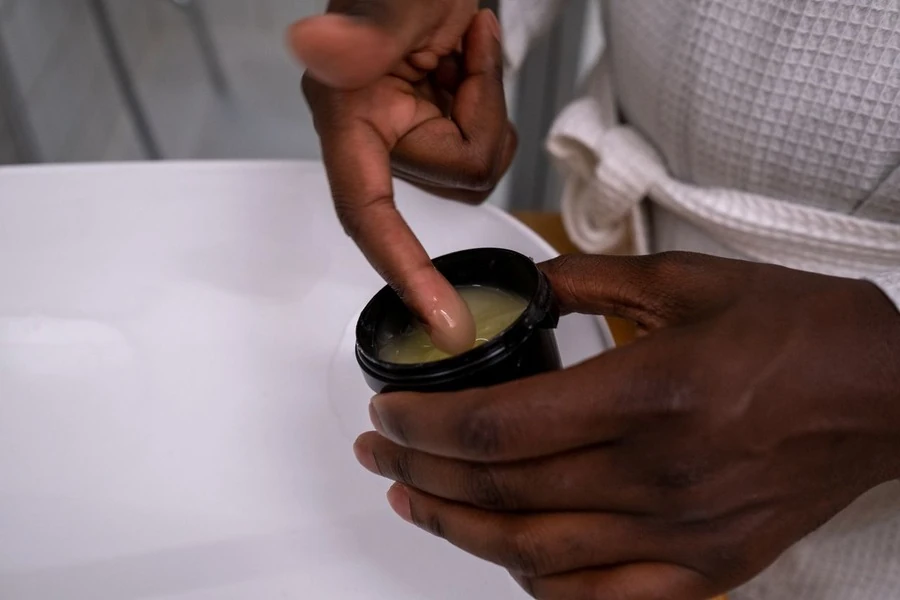
Retinoids are the most proven cream; start with a pea-sized amount two or three nights a week. Photo: cottonbro studio / Pexels
Creams with real evidence
Retinoids are the most proven topical treatment. Prescription tretinoin has been shown in many trials to increase new collagen in sun-damaged skin over 6 to 12 months. Over-the-counter retinol is gentler and weaker, because the skin has to convert it into the active form. Start with two or three nights a week, apply a pea-sized amount to dry skin, and expect some dryness and flaking at first. Use sunscreen in the daytime, because retinoids make skin more sensitive to the sun. Retinoids should not be used in pregnancy.
Vitamin C serums (L-ascorbic acid at 10 to 20%) have smaller studies showing modest improvement in fine lines and pigmentation. They oxidise and turn brown once opened, so buy small bottles and keep them out of light.
Hyaluronic acid draws water into the outer layer of skin and makes it look plumper for a while. It is a good moisturiser, but it does not build collagen.

Collagen powder is digested like any other protein. Photo: Towfiqu barbhuiya / Pexels
Collagen supplements
Collagen powders and drinks are broken down in the gut into amino acids and small peptides, like any other protein. Some trials report small improvements in skin hydration and elasticity after 8 to 12 weeks, but most of those trials were funded by manufacturers. When reviewers separate them from independent, well-designed trials, the benefit becomes much smaller or disappears. If you choose to take one, treat it as an optional extra, never as a substitute for sunscreen. Some marine collagen products come from fish, which matters for anyone with a fish allergy.
What to eat
The body needs vitamin C to build collagen; that is why scurvy makes old wounds reopen. Most people get enough from a varied diet. One orange, a kiwifruit or half a red pepper covers the daily need. Adequate protein matters too, from eggs, dairy, fish, meat, beans or lentils.
Bone broth is often promoted as a collagen source. Its collagen content varies a lot between batches, and the collagen is digested like any other protein. It is a nourishing food, but not a skin treatment.
Beyond home care
For more noticeable changes, dermatologists use treatments that cause controlled injury to the skin to stimulate new collagen. These include microneedling, laser resurfacing and chemical peels. They carry risks of scarring and pigment changes, especially on darker skin. Have them done by a qualified practitioner who has experience with your skin type.
Sources
- Hughes M, Williams G, Baker P, Green A, "Sunscreen and Prevention of Skin Aging", Annals of Internal Medicine 158 (2013): 781-790. https://doi.org/10.7326/0003-4819-158-11-201306040-00002
- NHS, "Sunscreen and sun safety". https://www.nhs.uk/live-well/seasonal-health/sunscreen-and-sun-safety/
- MedlinePlus, "Aging changes in skin: MedlinePlus Medical Encyclopedia". https://medlineplus.gov/ency/article/004014.htm




Comments (0)
Leave a Reply
Comments are moderated. Please read our Comment Policy before posting.
Log in to post a comment.