

 Jun 08, 2026
 3 min read
Gastric Acid Production: How Your Stomach Creates and Controls Digestive Acid
Gastric Acid Production: How Your Stomach Creates and Controls Digestive Acid
The stomach is a key part of the digestive system.
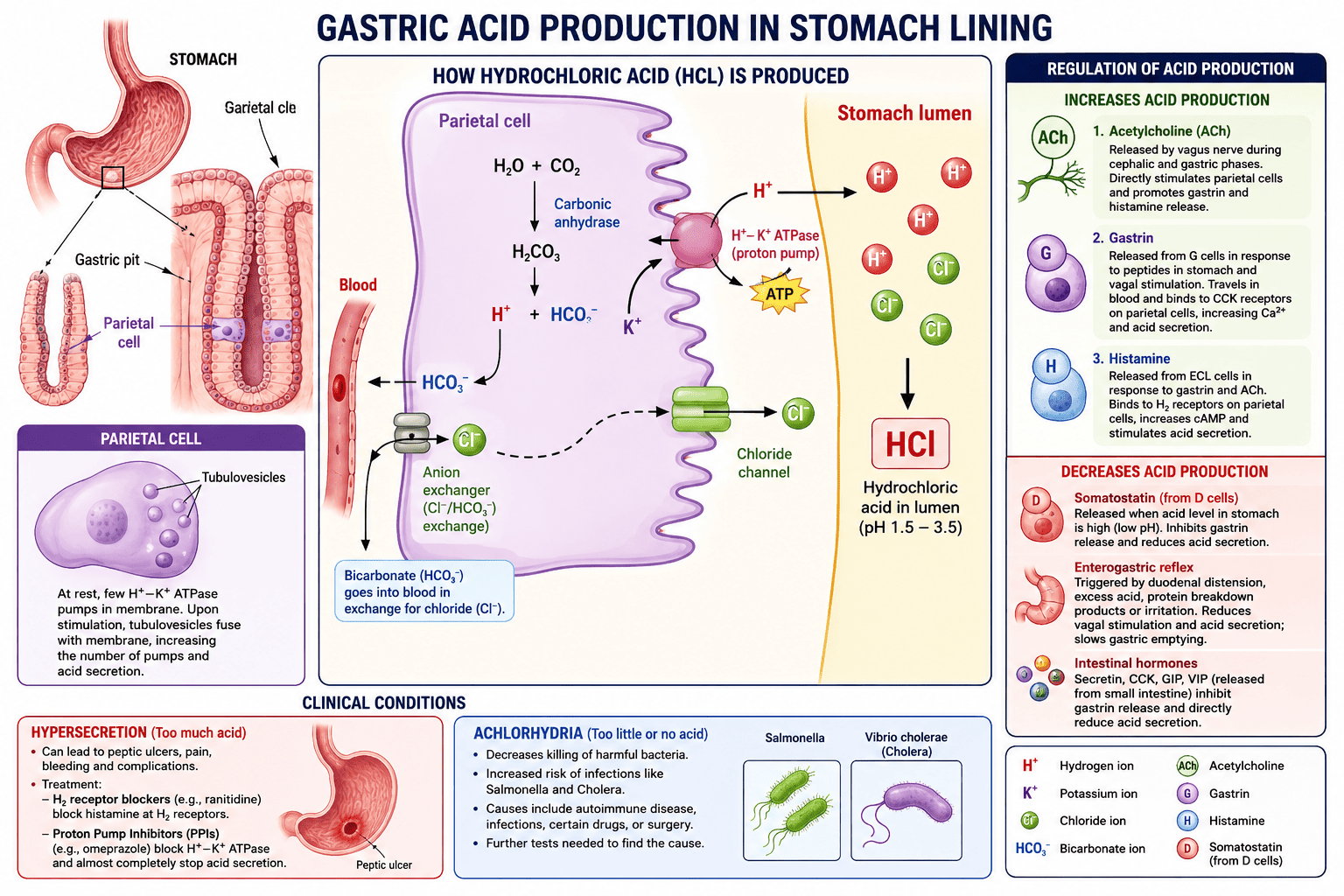
Its primary function is to break down food and destroy harmful bacteria that may be present in the food or drinks you consume. To achieve this, the stomach produces a powerful acid named hydrochloric acid (HCl). The environment inside the stomach is very acidic, with a pH level that typically ranges from 1.5 to 3.5.
How Stomach Acid Is Produced
Hydrochloric acid is created by specific cells in the stomach known as parietal cells.
The process starts when water (H₂O) and carbon dioxide (CO₂) combine within these cells.
An enzyme called carbonic anhydrase helps this combination into carbonic acid, which quickly breaks down into:
- Hydrogen ions (H⁺)
- Bicarbonate ions (HCO₃⁻)
The hydrogen ions are transported into the stomach through a protein called the proton pump (H⁺/K⁺ ATPase).
At the same time, chloride ions (Cl⁻) move into the stomach. Once hydrogen and chloride ions meet in the stomach lining, they combine to form hydrochloric acid (HCl).
How the Body Increases Acid Production
The stomach doesn't constantly make a lot of acid.
Instead, acid production increases when food is anticipated or eaten.
1. Nerve Signals (Acetylcholine)
The vagus nerve releases a chemical known as acetylcholine (ACh) when:
- You see, smell, taste, or think about food.
- Food stretches the stomach after being eaten.
This directly activates parietal cells to release more acid.
2. Gastrin Hormone
G cells in the stomach produce a hormone named gastrin.
Gastrin levels rise when:
- The vagus nerve is stimulated.
- Proteins in food start to break down.
This hormone travels through the bloodstream to the stomach, where it signals parietal cells to make more acid.
3. Histamine Release
Special cells in the stomach called enterochromaffin-like (ECL) cells release histamine.
Histamine attaches to H₂ receptors on parietal cells, which strongly promotes acid production.
Both gastrin and acetylcholine encourage histamine release, making this an important pathway for increasing stomach acid.
How the Body Reduces Acid Production
To protect the stomach and intestines, the body has several ways to slow down acid production.
Somatostatin
When the stomach becomes too acidic between meals, D cells release somatostatin.
Somatostatin stops gastrin production, which helps reduce acid levels.
Enterogastric Reflex
When partially digested food (chyme) enters the small intestine, the body sends signals to slow the activity of the stomach.
This occurs when:
- The intestine is stretched.
- Too much acid reaches the intestine.
- The intestine becomes irritated.
These signals lower acid production and slow down the emptying of the stomach.
Hormones From the Small Intestine
The small intestine releases hormones that help control stomach acid, such as:
- Secretin
- Cholecystokinin (CCK)
- Glucose-dependent insulinotropic peptide (GIP)
- Vasoactive intestinal peptide (VIP)
These hormones decrease acid secretion and help manage the digestion process.
When Too Much Acid Is Produced (Hypersecretion)
Excess stomach acid can harm the stomach lining and cause peptic ulcers.
Possible complications include:
- Stomach pain
- Bleeding ulcers
- Damage to surrounding tissues
Medicines Used to Reduce Acid
H₂ Receptor Blockers
Examples include ranitidine and similar drugs.
These block histamine from stimulating acid production.
Proton Pump Inhibitors (PPIs)
Examples include omeprazole, pantoprazole, and esomeprazole.
These medicines stop the proton pump directly, making them very effective at lowering stomach acid.
When Too Little Acid Is Produced (Achlorhydria)
Achlorhydria is a condition where the stomach makes very little or no acid.
This can increase the risk of infections such as:
- Salmonellosis
- Cholera
People with achlorhydria may also face digestive problems and difficulty in absorbing certain nutrients.
Since many different conditions can lead to low stomach acid, further medical tests are often needed to find the exact reason.
Conclusion
Stomach acid plays a crucial role in digestion and in protecting the body from harmful microorganisms.
The body carefully manages acid production through nerves, hormones, and feedback mechanisms. When this balance is disrupted, conditions like peptic ulcers or achlorhydria may occur, making proper diagnosis and treatment important for good digestive health.


Comments (0)
Leave a Reply
Log in to post a comment.