

 May 30, 2026
 4 min read
Anemia: Understanding the Silent Oxygen Shortage in Your Body
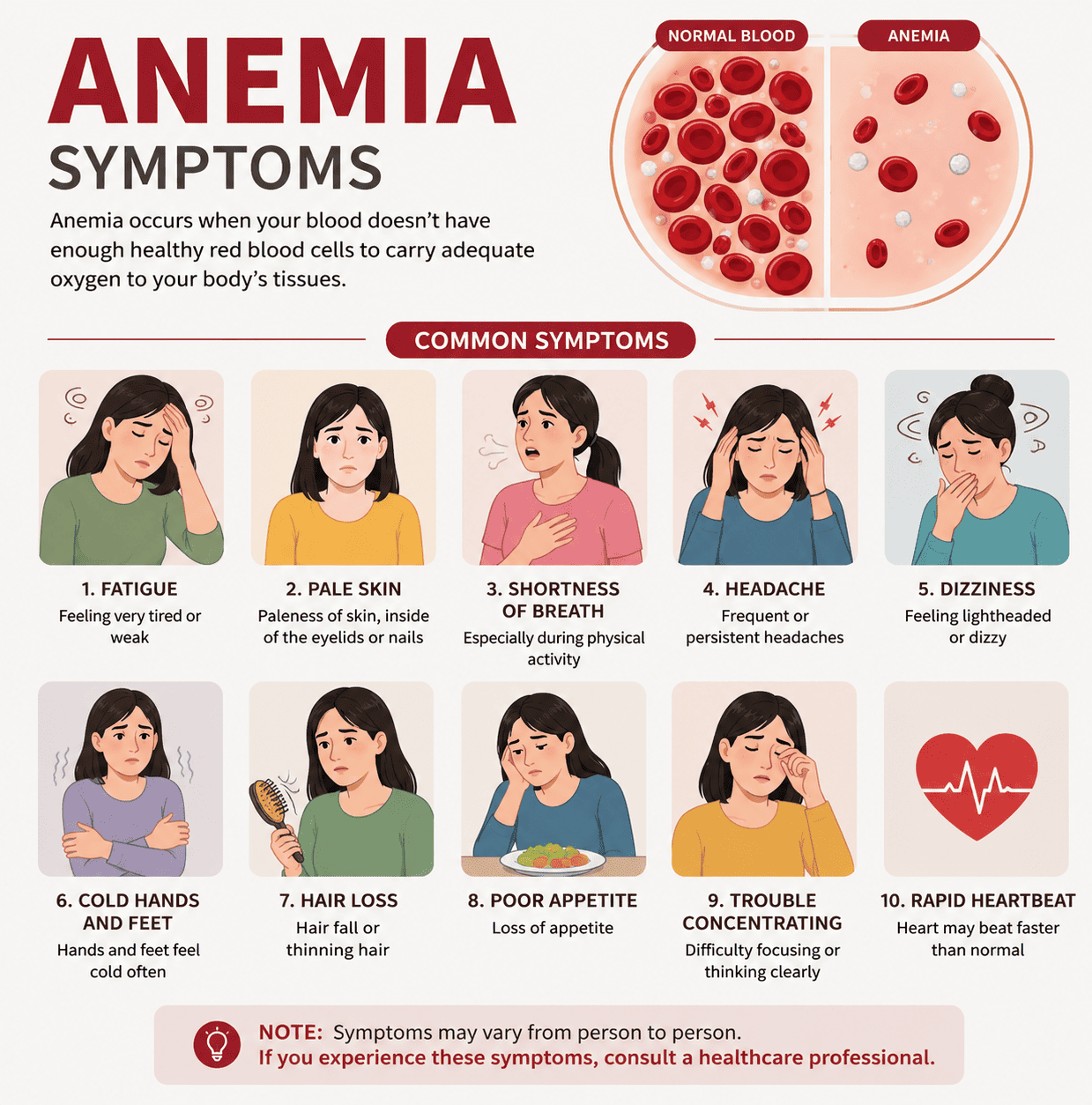
Anemia: Understanding the Silent Oxygen Shortage in Your Body
Anemia is one of the most common blood disorders around the world.
It happens when the body does not have enough healthy red blood cells or hemoglobin to carry oxygen properly to tissues and organs. Hemoglobin is the iron-based protein inside red blood cells that carries oxygen from the lungs to all parts of the body.
When the body doesn’t get enough oxygen, it can’t function properly, which often leads to feelings of tiredness, weakness, and difficulty breathing.
Some types of anemia are mild and temporary, while others can be severe and may suggest an underlying health problem that needs medical care.
What Happens in Anemia?
Red blood cells serve as the body’s way of transporting oxygen.
They take in oxygen from the lungs and deliver it throughout the body. In anemia, there may be too few red blood cells or not enough hemoglobin to carry out this function well.
As a result, the organs and tissues receive less oxygen than they need, which leads to many of the symptoms linked to anemia.
Common Types of Anemia
There are several types of anemia, each with different causes:
1. Iron-Deficiency Anemia
This is the most common type of anemia, caused by a lack of iron needed to make hemoglobin.
2. Vitamin-Deficiency Anemia
This develops when the body lacks essential nutrients like vitamin B12 or folate, which are necessary for producing healthy red blood cells.
3. Aplastic Anemia
This is a rare but serious condition where the bone marrow does not make enough blood cells.
4. Sickle Cell Anemia
This is an inherited disorder that causes red blood cells to take on a sickle shape, which makes it hard for them to carry oxygen and leads to a shorter lifespan for these cells.
4. Thalassemia
This is a genetic disorder that affects hemoglobin production and can lead to ongoing anemia.
5. Anemia of Chronic Disease
This occurs due to long-term illnesses like kidney disease, cancer, autoimmune disorders, or chronic infections.
Signs and Symptoms
The symptoms of anemia can vary depending on how severe it is and what's causing it.
Mild anemia may not be noticed at all, but more severe cases can greatly impact daily activities.
Common symptoms include:
- - A constant sense of tiredness and fatigue
- - Weakness and low energy
- - Shortness of breath
- - Pale or yellowish skin
- - Dizziness or lightheadedness
- - A fast or irregular heartbeat
- - Chest pain
- - Cold hands and feet
- - Frequent headaches
In some cases, the symptoms of another illness may mask the signs of anemia, which is why blood tests are often needed for an accurate diagnosis.
When Should You See a Doctor?
You should see a healthcare professional if you experience unexplained fatigue, difficulty breathing, dizziness, or weakness.
Many people find out they have anemia during routine blood tests or when donating blood, when low hemoglobin levels are found.
Getting an early diagnosis can help find the root cause and prevent serious complications.
Why Does Anemia Occur?
Anemia can happen when the body:
- - Makes too few red blood cells
- - Makes too little hemoglobin
- - Loses blood faster than it can replace it
- - Destroys red blood cells more quickly than they can be made
Major Causes of Anemia
1. Iron Deficiency
Not getting enough iron, blood loss, pregnancy, or poor iron absorption can lower hemoglobin levels.
2. Vitamin Deficiencies
Low levels of vitamin B12 or folate can hinder the body's ability to create healthy red blood cells.
3. Chronic Inflammation
Conditions such as rheumatoid arthritis, kidney disease, HIV/AIDS, and cancer can disrupt red blood cell production.
4. Bone Marrow Disorders
Diseases like leukemia and myelofibrosis can affect the bone marrow, making it hard to produce blood cells.
5. Hemolytic Disorders
Some conditions cause red blood cells to break down too soon, leading to anemia.
6. Genetic Conditions
Inherited disorders like sickle cell disease and thalassemia can cause anemia that lasts a lifetime.
Can Anemia Be Prevented?
Not all types of anemia can be prevented, especially those that are inherited.
However, many cases linked to nutritional deficiencies can be avoided by eating a healthy diet.
Iron-Rich Foods
- Lean red meat
- Poultry
- Fish
- Beans and lentils
- Iron-fortified cereals
- Spinach and other leafy greens
- Dried fruits
Folate Sources
- Citrus fruits
- Leafy vegetables
- Peas
- Kidney beans
- Peanuts
- Fortified grains and cereals
Vitamin B12 Sources
- Meat
- Eggs
- Dairy products
- Fortified cereals
- Soy products
Vitamin C Sources
Vitamin C helps the body absorb iron more efficiently.
Good sources include:
- - Oranges and citrus juices
- - Strawberries
- - Tomatoes
- - Bell peppers
- - Broccoli
- - Melons
Conclusion:
Anemia is more than just feeling tired—it is a condition that affects how well the body transports oxygen.
Understanding its symptoms, causes, and prevention methods can help you identify warning signs early and seek the right medical care. Eating a balanced diet that includes iron, vitamins, and other essential nutrients is one of the best ways to support healthy blood production and overall well-being.


Comments (0)
Leave a Reply
Log in to post a comment.