

 Jun 11, 2026
 2 min read
Fever and Immunity: How Heat Helps Your Body Heal
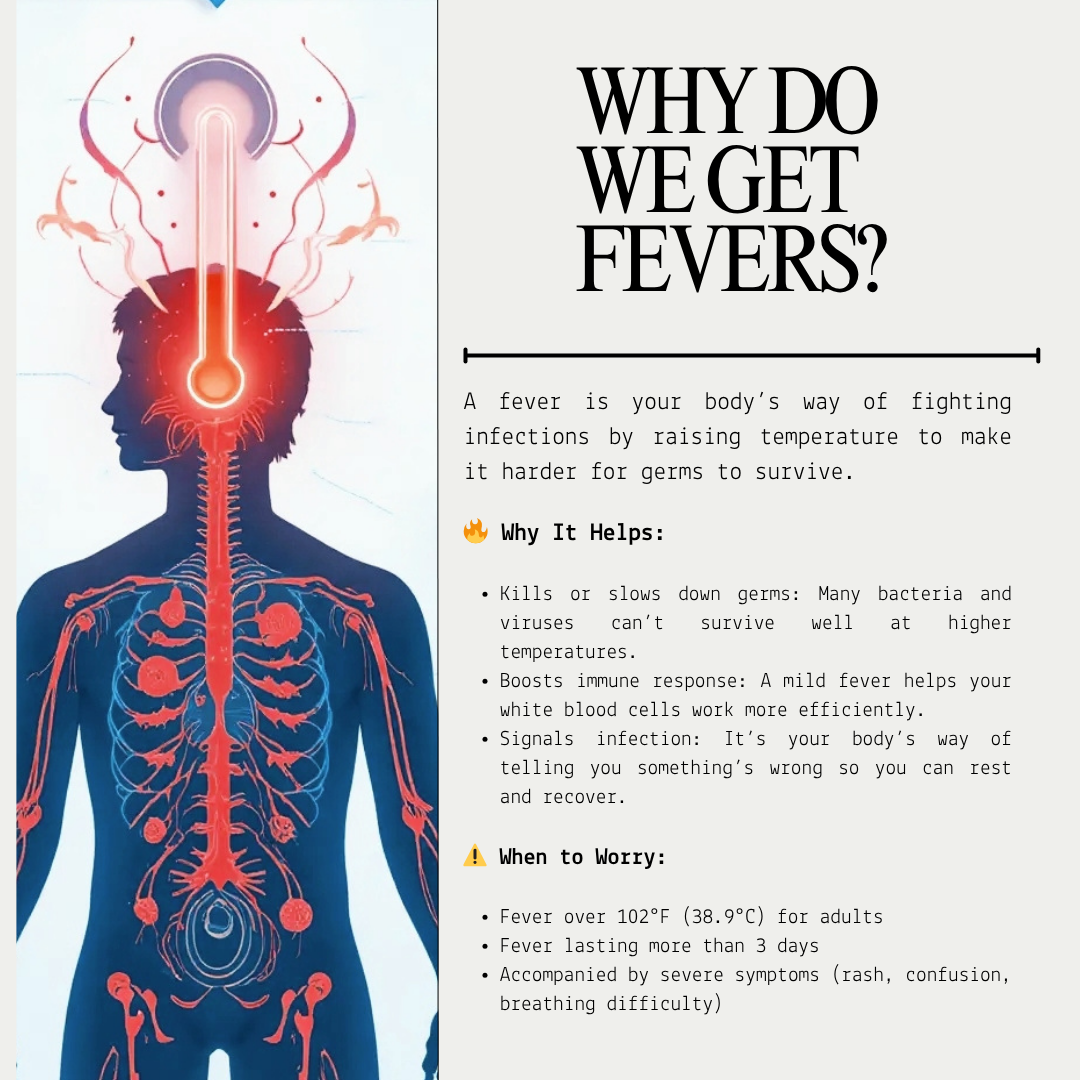
Why Do We Get Fever? Understanding the Body's Natural Defense Mechanism
Fever is one of the most common signs that the body is fighting an illness.
Almost everyone experiences a fever at some point in life, whether due to an infection, inflammation, or another medical condition. But have you ever wondered why our body temperature rises when we're sick?
What Is a Fever?
A fever is a temporary increase in body temperature, usually above 38°C (100.4°F).
The normal body temperature is around 37°C (98.6°F), although it can vary slightly from person to person.
Fever itself is not a disease.
Instead, it is a symptom that signals the body's immune system is actively responding to a threat.
Why Does Fever Happen?
When harmful bacteria, viruses, or other pathogens enter the body, the immune system releases chemicals called pyrogens.
These substances travel to the brain and affect the hypothalamus—the body's temperature-control center.
The hypothalamus raises the body's temperature set point, causing the body to generate and conserve heat.
As a result, you may experience:
- Chills
- Shivering
- Sweating
- Feeling cold despite having a high temperature
These responses help increase body temperature to create an environment that is less favorable for many disease-causing microorganisms.
Benefits of Fever
Although fever can be uncomfortable, it serves several important functions:
1. Helps Fight Infections
Many bacteria and viruses reproduce less effectively at higher temperatures.
2. Boosts Immune Function
Fever enhances the activity of white blood cells, helping the immune system respond more efficiently.
3. Signals That Something Is Wrong
A fever acts as an early warning sign that the body is dealing with an infection or another health problem.
Common Causes of Fever
Fever can occur due to many different reasons, including:
- Viral infections such as the flu or common cold
- Bacterial infections such as pneumonia or urinary tract infections
- COVID-19
- Ear and throat infections
- Autoimmune diseases
- Heat exhaustion
- Certain medications
- Vaccinations
Symptoms That May Accompany Fever
Along with an elevated temperature, a person may experience:
- Headache
- Fatigue
- Muscle aches
- Loss of appetite
- Dehydration
- Sweating
- Chills and shivering
When Is Fever Dangerous?
Most fevers are harmless and resolve once the underlying illness improves.
However, medical attention may be needed if:
- Fever exceeds 40°C (104°F)
- It lasts more than three days
- There is difficulty breathing
- Severe dehydration occurs
- Confusion or seizures develop
- A baby younger than three months has a fever
How to Manage a Fever
To help the body recover:
- Drink plenty of fluids
- Get adequate rest
- Wear lightweight clothing
- Use fever-reducing medications if recommended by a healthcare professional
- Monitor symptoms carefully
Conclusion
Fever is a natural defense mechanism that helps the body combat infections and illnesses.
While it can make you feel uncomfortable, it is often a sign that your immune system is working hard to protect you. Understanding why fever occurs can help you manage it appropriately and recognize when medical attention is necessary.



Comments (0)
Leave a Reply
Log in to post a comment.