

 Jun 15, 2026
 5 min read
Beat the Heat: A Complete Guide to Heatstroke Prevention
Heatstroke: A Serious Heat Emergency That Must Not Be Ignored
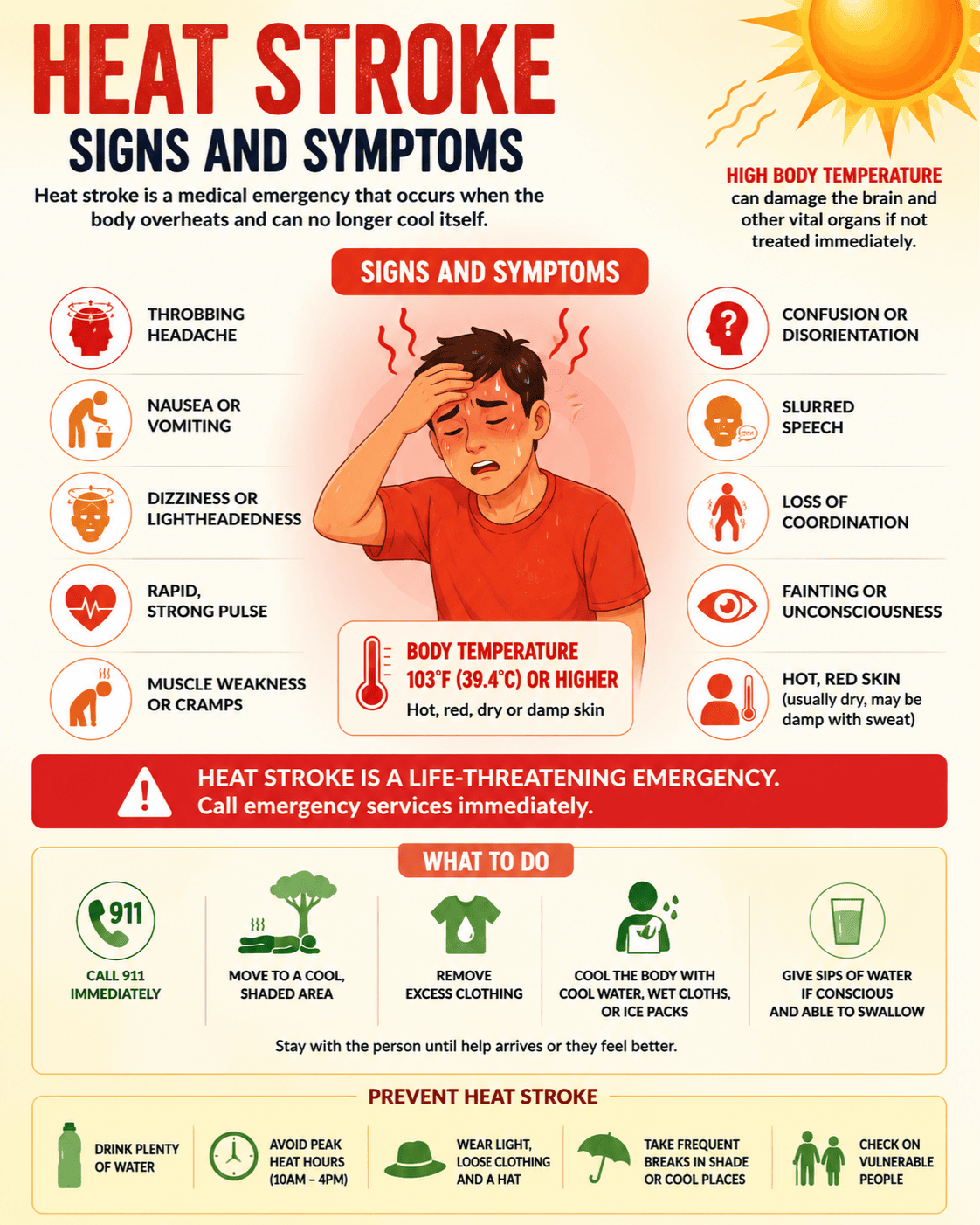
Heatstroke is the most severe type of heat illness and happens when the body's temperature goes up to a dangerously high level, often 104°F (40°C) or more.
It typically occurs after long exposure to extreme heat or when someone engages in heavy physical activity in very warm conditions. If not treated quickly, heatstroke can become life-threatening.
What Happens During Heatstroke?
The body usually cools itself by sweating.
But when the heat is very high or when there is a lot of fluid loss, the body's natural cooling system can stop working. This causes the internal body temperature to increase rapidly, which can be very harmful to the heart, brain, and other important organs.
Heatstroke is a serious medical condition that needs immediate attention because if not treated quickly, it can cause serious harm to the organs or even lead to death.
Warning Signs and Symptoms
Spotting the early warning signs of heatstroke can be lifesaving.
Some of the common symptoms include:
Very High Body Temperature
A body temperature of 104°F (40°C) or higher is a key sign of heatstroke.
Changes in Thinking and Behavior
Because the brain is very sensitive to heat, people may show:
- Confusion
- Irritability
- Agitation
- Trouble speaking clearly
- Delirium
- Seizures
- Losing consciousness or going into a coma
Abnormal Sweating
Depending on the cause, the skin can be:
- Hot and dry in typical heatstroke
- Very sweaty in cases related to exercise
Digestive Problems
Some people may have:
- Feeling sick
- Throwing up
- Upset stomach
Red or flushed skin
The skin often turns red as the body temperature goes up.
Fast Breathing and Rapid Heartbeat
The heart and lungs work harder to cool the body, leading to:
- Quick and shallow breathing
- A faster pulse
Strong headache
A strong, throbbing headache is also a common symptom of overheating.
When to Get Emergency Help
Heatstroke is a medical emergency.
If you think someone is suffering from heatstroke:
1. Call for emergency medical help right away.
2. Move the person to a cool or shaded area.
3. Take off any extra clothing.
4. Start cooling the person as quickly as possible:
- Put them in cool water if possible.
- Use a cool shower or hose.
- Apply cold, wet towels.
- Put ice packs on the neck, armpits, and groin.
- Fan the person while misting them with cool water.
Do not wait until the symptoms seem better before getting professional help.
What Causes Heatstroke?
Heatstroke happens when the body can't properly control its temperature.
There are two main types:
1. Classic (Non-Exertional) Heatstroke
This type usually happens after being in very hot and humid conditions for a long time.
It is more common in older adults and people with long-term health conditions.
2. Exertional Heatstroke
This type develops during very intense physical activity in hot weather.
People like athletes, laborers, military members, and outdoor workers are more at risk.
Several factors can contribute to either type:
- Wearing heavy or tight clothing
- Lack of enough fluids
- Drinking too much alcohol
- Spending long periods in high temperatures
Who Is Most at Risk?
While anyone can get heatstroke, some groups are at higher risk.
Children and the Elderly
Their bodies aren't as good at regulating temperature or staying hydrated.
Athletes and Outdoor Workers
Doing heavy physical work in hot conditions causes the body to generate more heat.
People Who Are Sudden Exposed to Heat
Traveling to places that are very hot or experiencing early heat waves can increase the risk.
People Without Air Conditioning
Fans may offer some help, but air conditioning is the most effective way to prevent overheating.
People Taking Certain Medications
Some medications can affect hydration or temperature control, including:
- Diuretics
- Beta blockers
- Antidepressants
- Antipsychotics
- ADHD medications
People with Chronic Illnesses
Conditions such as:
- Heart disease
- Lung disease
- Obesity
- Past episodes of heatstroke
can make a person more likely to get heatstroke.
Possible Complications
Not treating heatstroke can lead to serious problems.
Organ Damage
High body temperature for too long can harm:
- The brain
- The heart
- The kidneys
- Muscles
- The liver
Some of this damage can be permanent.
Death
Without quick cooling and medical care, heatstroke can be fatal.
How to Prevent Heatstroke
Good news is that heatstroke can usually be prevented.
Wear Appropriate Clothing
Choose light, loose clothing made from breathable fabric like cotton or linen.
Stay Hydrated
Drink water regularly, especially when you're outdoors or exercising.
Protect Against the Sun
Use:
- A wide-brimmed hat
- Sunglasses
- Broad-spectrum sunscreen (SPF 15 or higher)
Be Aware of Medication Effects
Talk to your doctor about how medications that affect hydration or temperature control may impact your risk of heatstroke.
Never Leave Anyone in a Parked Car
Even on warm days, car temperatures can rise quickly and become deadly in a short time.
Avoid the Worst Times of the Day for Heat
Plan outdoor activities, exercise, or sports during cooler times, such as early morning or evening.
Give Your Body Time to Adjust
When moving to a hotter climate, gradually increase activity.
It may take several weeks to fully adjust to the heat.
Take Extra Precautions if You Are at High Risk
Individuals with chronic health conditions, older people, and those taking specific medications should minimize heat exposure and watch closely for symptoms of overheating.
Final Thoughts:
Heatstroke is a serious and possibly fatal medical condition, but it is also one of the most preventable heat-related illnesses.
By understanding the warning signs, recognizing risk factors, and taking simple steps to stay safe, you can protect yourself and others during hot weather. If someone shows signs of heatstroke, action must be taken immediately—quick cooling and professional care can save a life.


Comments (0)
Leave a Reply
Log in to post a comment.