

 Jun 19, 2026
 5 min read
High Uric Acid (Hyperuricemia): When It Matters and How It's Treated
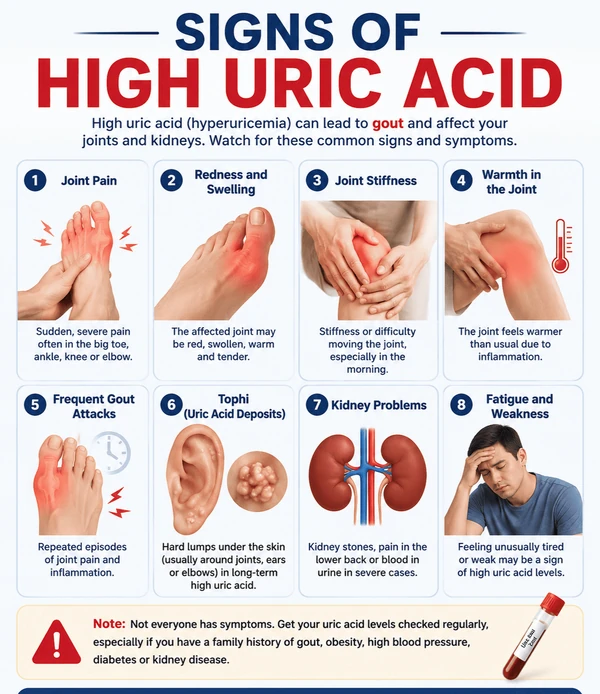
Uric acid stops dissolving in blood at around 6.8 mg/dL. Above that level it can form needle-shaped crystals of monosodium urate, and those crystals are what cause gout. That one number explains most of what follows: what "high" means, why many people with a high result never get symptoms, and why gout treatment aims for a level comfortably below it.
Where uric acid comes from
Uric acid is the end product of breaking down purines, compounds found in every cell of the body and in many foods. About two thirds of it is cleared by the kidneys and the rest through the gut. Levels rise when the body makes too much, when the kidneys clear too little, or both. In most people with gout, under-excretion by the kidneys is the bigger part.
Labs usually quote normal ranges of about 3.4 to 7.0 mg/dL for men and 2.4 to 6.0 mg/dL for women, though these vary slightly. Women's levels rise after menopause, which is why gout is uncommon in women before about 50.
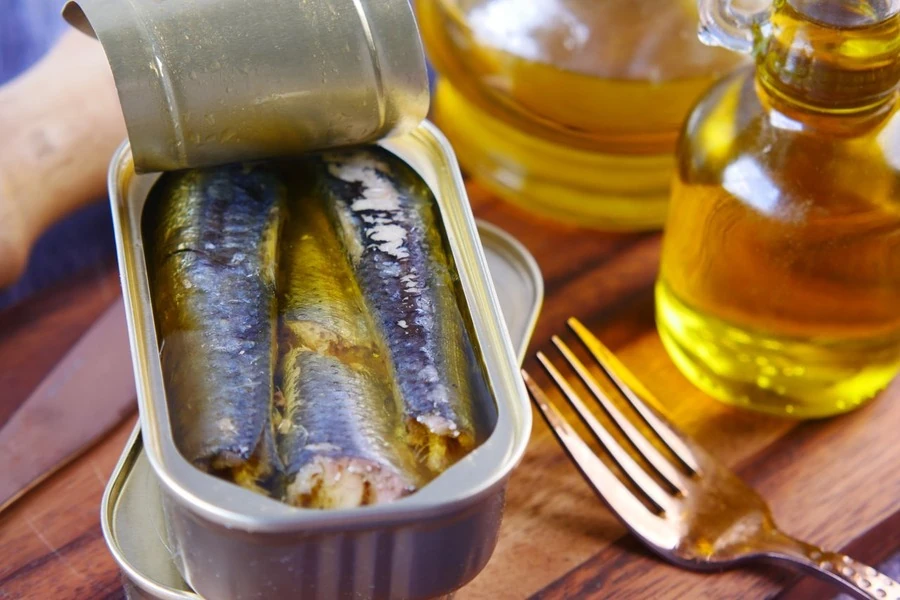
Organ meats, shellfish, beer and fructose-sweetened drinks all push uric acid up. Photo: Towfiqu barbhuiya / Pexels
What pushes it up
Food and drink. Organ meats, anchovies, sardines, mussels and other shellfish are high in purines. Beer is worse than wine or spirits because it adds purines of its own to the alcohol. Drinks sweetened with fructose, including many sodas and some fruit juices, raise uric acid too, even though they contain no purines.
Body weight and metabolism. Excess weight, insulin resistance and high blood pressure all reduce how much uric acid the kidneys clear.
Kidney disease. Less filtering means more uric acid stays in the blood.
Medicines. Thiazide and loop diuretics (hydrochlorothiazide, furosemide) are the most common culprits. Low-dose aspirin, ciclosporin, tacrolimus and the tuberculosis drugs pyrazinamide and ethambutol can also raise levels. Never stop a prescribed medicine for this reason without advice; there is often a substitute. Losartan, for example, lowers blood pressure and slightly lowers uric acid as well.
Genes. Gout runs in families, largely through genes that control how the kidneys handle urate.
When it causes symptoms
Most people with high uric acid never develop gout. The ones who do usually have their first attack after years of high levels, typically in the night. The joint becomes hot, swollen, red and so tender that even a bedsheet hurts. The base of the big toe is the classic spot, and is involved in about half of first attacks. The ankle, midfoot and knee are also common. Untreated, an attack settles over one to two weeks.
If levels stay high, attacks come more often and involve more joints. After years, chalky lumps called tophi can form under the skin over the fingers, elbows, toes or ears. Uric acid can also form kidney stones, which cause severe one-sided back or groin pain, sometimes with blood in the urine.
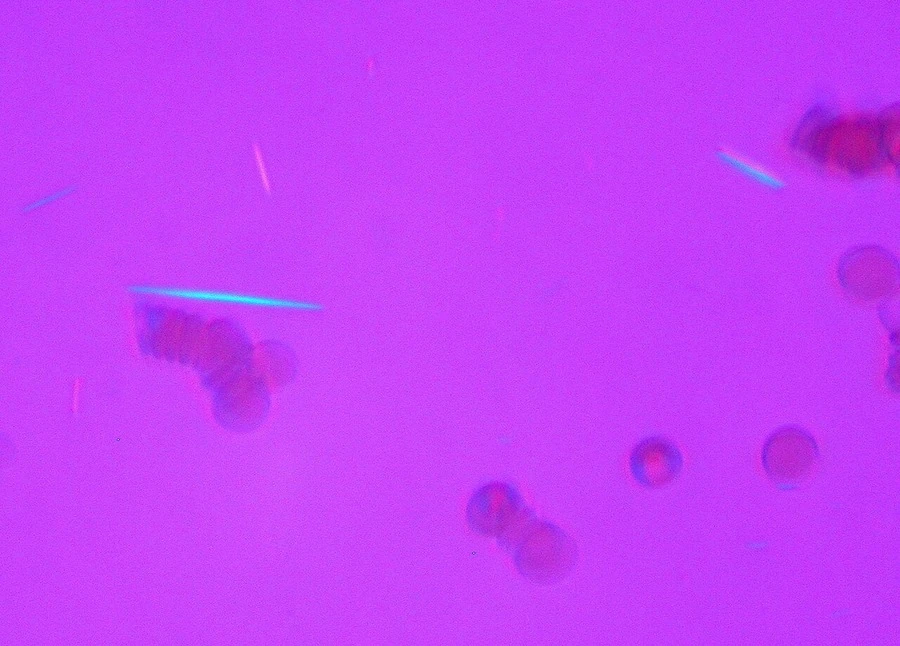
The firmest diagnosis comes from seeing urate crystals in fluid drawn from the joint. Photo: Ed Uthman / Wikimedia Commons, CC BY 2.0
Tests
A blood test measures uric acid, but it can read normal during an attack, so it is best repeated two weeks or more after the attack settles. The firmest diagnosis comes from drawing fluid from the joint and seeing urate crystals under a microscope. Ultrasound or a special CT scan can show crystal deposits when that isn't possible. Kidney function is checked at the same time, because it affects which medicines are safe.
Treating an attack
The earlier treatment starts, the better it works. Options are an anti-inflammatory such as naproxen, low-dose colchicine, or a short course of a steroid such as prednisolone. The choice depends on your kidneys, stomach, heart and other medicines. Rest, ice and raising the joint help too.
Bringing levels down for good
Long-term urate-lowering treatment is recommended for people with frequent attacks (two or more a year), tophi, joint damage on X-ray, or uric acid kidney stones. The American College of Rheumatology's 2020 guideline sets a clear target: keep uric acid below 6 mg/dL, and lower for some people with tophi (ACR guideline).
Allopurinol is the first choice. It is started at a low dose (100 mg a day or less, lower in kidney disease) and raised every few weeks until the target is reached. Many people end up on 300 mg or more. People of Han Chinese, Korean or Thai descent, and African Americans, are more likely to carry a gene (HLA-B*5801) linked to a rare but serious skin reaction to allopurinol. Testing for it first is recommended.
Febuxostat is an alternative. In 2019 the US FDA added a boxed warning after the CARES trial found more cardiovascular deaths with febuxostat than with allopurinol, so it is generally avoided in people with heart disease.
Two points cause a lot of confusion. First, attacks often become more frequent in the first months of treatment, as crystals dissolve and shift. That is why a low dose of colchicine or an anti-inflammatory is usually given alongside for the first three to six months. Second, don't stop allopurinol during an attack. Stopping and restarting makes things worse.
A high uric acid result with no symptoms at all usually isn't treated with medicine. The exception is when there are other reasons, such as recurrent stones.
Food and habits that help
Diet alone typically lowers uric acid by about 1 mg/dL. That is useful, but it is rarely enough on its own once gout is established. The changes with the best evidence are cutting down on beer, spirits and sugary drinks, eating organ meats and shellfish less often, losing weight gradually (crash diets can trigger attacks), and drinking enough water to keep urine pale. Low-fat dairy and coffee are both linked with lower uric acid levels. Cherries have some encouraging observational data, but not enough to replace treatment.
Sources
- FitzGerald J, Dalbeth N, Mikuls T, Brignardello‐Petersen R et al., "2020 American College of Rheumatology Guideline for the Management of Gout", Arthritis Care & Research 72 (2020): 744-760. https://doi.org/10.1002/acr.24180
- White W, Saag K, Becker M, Borer J et al., "Cardiovascular Safety of Febuxostat or Allopurinol in Patients with Gout", New England Journal of Medicine 378 (2018): 1200-1210. https://doi.org/10.1056/NEJMoa1710895
- NHS, "Gout". https://www.nhs.uk/conditions/gout/



Comments (0)
Leave a Reply
Comments are moderated. Please read our Comment Policy before posting.
Log in to post a comment.