

 Jun 27, 2025
 4 min read
How Blood Pressure Affects the Kidneys, and How to Keep It Under Control

Each kidney holds roughly a million filtering units called nephrons. Every one of them starts with a glomerulus, a knot of capillaries so fine that blood is pushed through its walls under pressure to make urine. That design is efficient, and it is also why the kidneys are so exposed to high blood pressure. In the United States, high blood pressure is the second most common cause of kidney failure after diabetes (NIDDK).
A loop that feeds itself
Years of high pressure thicken and narrow the small arteries that feed the kidneys. The glomeruli take a pounding, start to leak protein, and gradually scar. As nephrons drop out, the ones that remain work harder, which strains them in turn.
The damage also runs the other way. The kidneys help set blood pressure by controlling how much salt and water the body keeps, and by releasing renin, the first step in a hormone chain that tightens blood vessels. Damaged kidneys hold on to more salt and fluid and often release more renin. Pressure rises, and the kidneys take more damage. Breaking that loop early is the whole point of treatment.
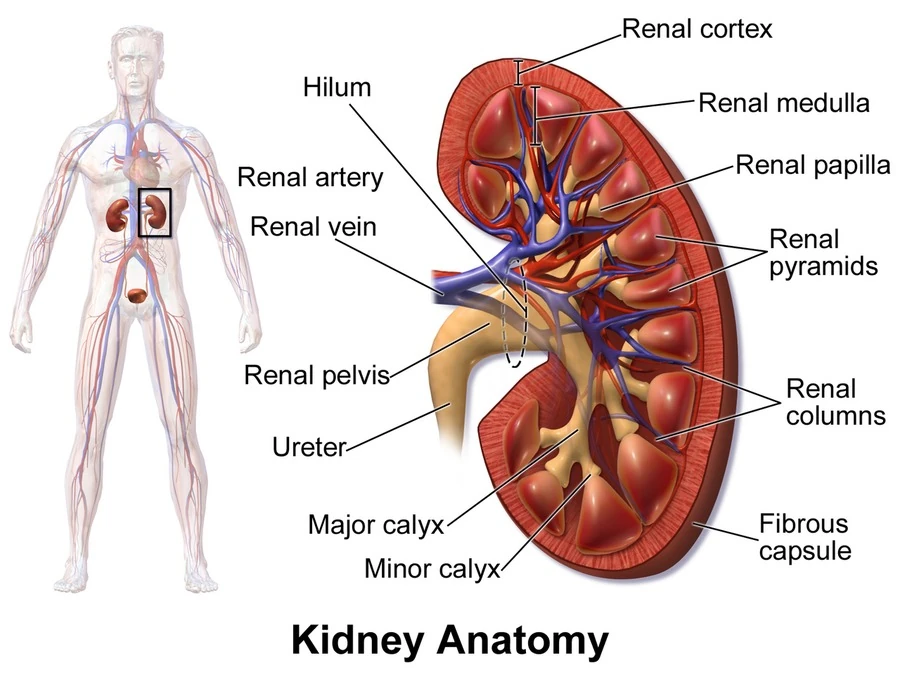
Kidney damage from high blood pressure is usually silent until a lot of function has gone. Image: Blausen Medical / Wikimedia Commons, CC BY 3.0
Why you won't feel it
Kidney damage from blood pressure is usually silent until a lot of function has gone. Swollen ankles, foamy urine, tiredness, itching and nausea tend to appear late. The way to catch it early is two simple tests, both worth asking for once a year if you have high blood pressure or diabetes:
- eGFR, worked out from a creatinine blood test, estimates how much the kidneys are filtering. Below 60 for more than three months counts as chronic kidney disease.
- Urine albumin-to-creatinine ratio (ACR) picks up small amounts of protein leaking into the urine. An ACR of 30 mg/g (3 mg/mmol) or more is often the first sign of damage, sometimes years before eGFR falls.
How low should blood pressure be?
For most adults, guidelines aim for below 130/80. For people who already have kidney disease, the international KDIGO guideline suggests a systolic target under 120 where it can be reached safely, measured carefully in a standardised way (KDIGO). Your own target depends on age, other conditions and how you tolerate treatment, so agree on it with your doctor.
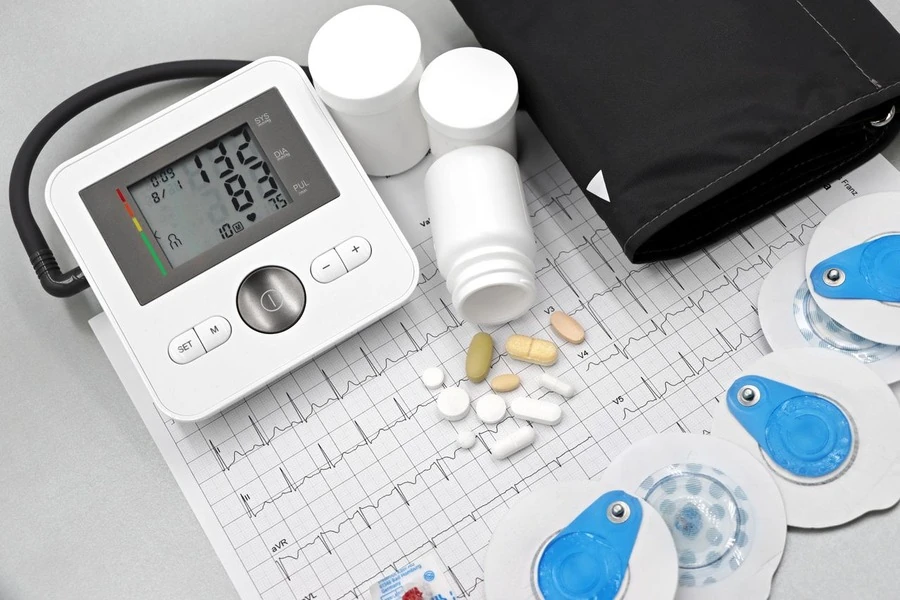
ACE inhibitors and ARBs protect the kidneys beyond what they do for blood pressure. Photo: Marta Branco / Pexels
Medicines that protect the kidneys
Not all blood pressure tablets are equal here. ACE inhibitors (ramipril, lisinopril, enalapril) and ARBs (losartan, valsartan, telmisartan) reduce protein leakage and slow kidney damage beyond what they do for blood pressure alone. A small rise in creatinine after starting one is expected. Blood tests one to two weeks in check that the rise stays modest and that potassium is safe.
A newer group, the SGLT2 inhibitors (dapagliflozin, empagliflozin), was first developed for diabetes. Large trials showed they also slow kidney decline in people with chronic kidney disease, with or without diabetes.
Medicines and products that can hurt
Anti-inflammatory painkillers such as ibuprofen, naproxen and diclofenac reduce blood flow to the kidneys. The riskiest combination is an anti-inflammatory taken together with a diuretic and an ACE inhibitor or ARB, which can cause sudden kidney injury. Paracetamol is usually the safer choice for pain. Ask before taking anything else.
When you are ill with vomiting, diarrhoea or a fever and can't keep fluids down, some medicines are best paused for a day or two until you are eating and drinking again: ACE inhibitors, ARBs, diuretics, metformin and SGLT2 inhibitors among them. Ask your pharmacist or doctor for written "sick day rules" for your own list of medicines.
Potassium supplements and potassium-based salt substitutes can be dangerous once the kidneys are weak, especially with the medicines above. Some imported herbal remedies have caused kidney failure: products containing aristolochic acid are the best-documented example. And "blood pressure support" supplements are not tested for kidney safety. If your kidney function is already reduced, check every new product with a pharmacist first.
What you can do day to day
The lifestyle measures that lower blood pressure also protect the kidneys: less salt, regular activity, a healthy weight, not smoking, and limiting alcohol. Our guide to lowering blood pressure without medication gives the typical effect of each one. If you have diabetes, keeping blood sugar in range matters just as much. Taken together, these measures and the right tablets can keep most people's kidneys working for life.
Sources
- US National Institutes of Health, "High Blood Pressure & Kidney Disease". https://www.niddk.nih.gov/health-information/kidney-disease/high-blood-pressure
- KDIGO, "Blood Pressure in CKD". https://kdigo.org/guidelines/blood-pressure-in-ckd/
- NHS, "Chronic kidney disease". https://www.nhs.uk/conditions/kidney-disease/



Comments (0)
Leave a Reply
Comments are moderated. Please read our Comment Policy before posting.
Log in to post a comment.