

 Feb 01, 2025
 5 min read
Foods That Lower Cholesterol, and by How Much

In 2003, Canadian researchers tested whether food alone could match a cholesterol-lowering drug. They combined four foods with proven effects: oats and other soluble fibre, almonds, soy protein, and spread fortified with plant sterols. People on this "portfolio" diet saw their LDL cholesterol fall by about 29% in a month. A comparison group on a low-fat diet plus a statin (lovastatin) saw a 31% fall (JAMA, 2003). That was under close supervision, and real-life results are smaller, but it shows food can make a real difference.
LDL cholesterol is the main fat that builds up in artery walls, so lowering it is the main target. Here is what different foods do, roughly in order of effect.
Swap saturated fat for unsaturated fat
This is the biggest dietary lever. Saturated fat raises LDL more than anything else in the diet. It is found in butter, ghee, fatty and processed meat, cheese, cream, coconut and palm oil, and pastries. Replacing it with unsaturated fats, such as olive, rapeseed (canola), sunflower or soybean oil, nuts, seeds and oily fish, lowers LDL. Simply cutting fat and eating more white bread and sugar instead does not.
In South Asian cooking, switching from ghee or vanaspati to a liquid vegetable oil for everyday cooking is one of the most effective single changes. Vanaspati can also contain trans fats, which are worse still.
Oats, barley and soluble fibre
Beta-glucan, the soluble fibre in oats and barley, forms a gel in the gut that traps bile acids and makes the liver pull cholesterol out of the blood. About 3 g a day lowers LDL by roughly 5 to 7%. That means a generous bowl of porridge plus another oat or barley food, such as oatcakes or barley in soup. Beans, lentils, chickpeas, aubergine, okra, apples and citrus also supply soluble fibre. Psyllium husk works the same way.
Foods fortified with plant sterols
Plant sterols and stanols block cholesterol absorption. Products fortified with them (some spreads, yoghurt drinks and milks) provide 1.5 to 2.4 g a day, which lowers LDL by about 7 to 10%. They are only worth using if your cholesterol is raised. They aren't recommended for children under five or in pregnancy and breastfeeding. The tiny amounts naturally present in vegetables are too small to have this effect.
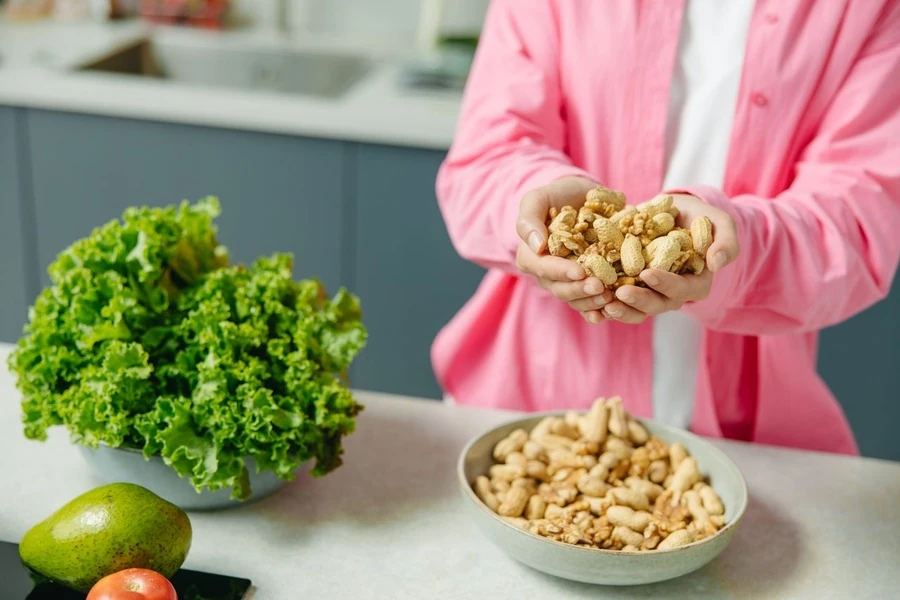
A daily handful of about 30 g of unsalted nuts lowers LDL by a few percent. Photo: Yaroslav Shuraev / Pexels
Nuts
A daily handful (about 30 g) of almonds, walnuts, pistachios or other unsalted nuts lowers LDL by a few percent. Nuts are also linked to fewer heart attacks in long-term studies. In the PREDIMED trial, a Mediterranean diet with extra nuts or extra-virgin olive oil cut heart attacks, strokes and cardiovascular deaths by about 30% compared with a low-fat diet (NEJM, 2018).
Soy foods
About 25 g of soy protein a day, from tofu, soy milk or edamame, lowers LDL by around 3 to 4%. That is small, but it adds up with the other changes.
Fatty fish: good, but for a different reason
Salmon, mackerel, sardines and trout lower triglycerides, another blood fat, more than LDL. Eating fish once or twice a week is linked to fewer deaths from heart disease. Fish oil capsules at standard doses did not prevent heart attacks in large trials, so fish is better eaten than swallowed as a capsule.
Popular foods with weaker evidence
- Garlic: small and inconsistent effects on cholesterol in trials. Fine to eat; don't count on it.
- Turmeric, pomegranate and berries: healthy foods, but no reliable effect on LDL.
- Green tea: a small drop in LDL in some studies.
- Avocado: helpful mainly when it replaces butter or other saturated fat.
- Eggs: for most people, the cholesterol in eggs raises blood cholesterol much less than saturated fat does. An egg a day is fine for most people.
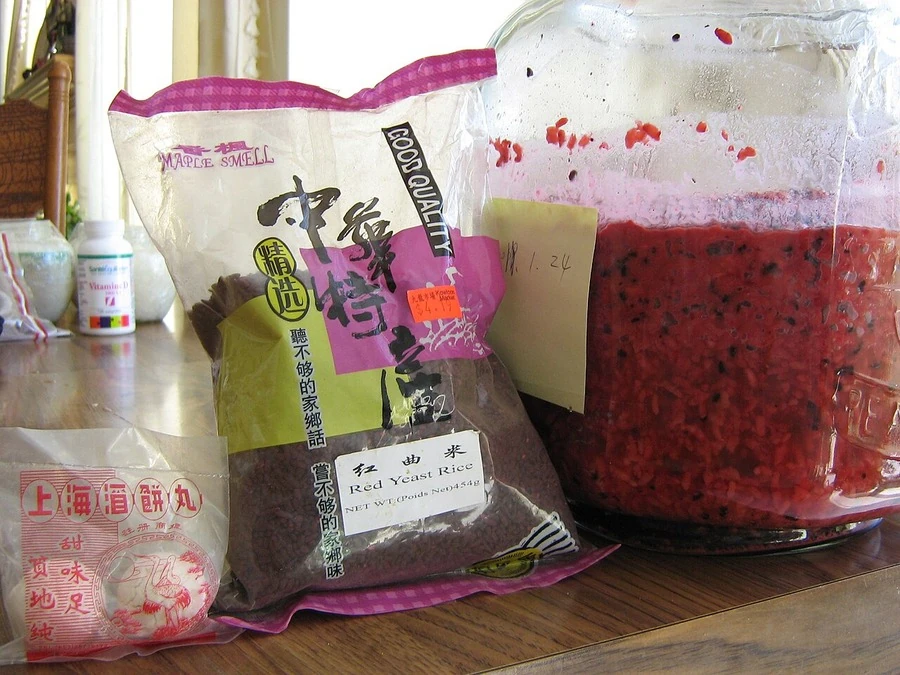
Red yeast rice contains a compound chemically the same as the statin lovastatin. Photo: Gluo88 / Wikimedia Commons, CC0
A caution about red yeast rice
Red yeast rice supplements lower cholesterol because they contain monacolin K, which is chemically the same as the drug lovastatin. That means the same side effects and interactions as a statin, but with unregulated doses that vary widely between products. Some are contaminated with citrinin, which can harm the kidneys. In 2024, a red yeast rice supplement sold in Japan was linked to kidney damage and several deaths. If you need a statin, a prescribed one is safer and its dose is reliable.
When food isn't enough
Diet typically lowers LDL by 10 to 20% in everyday life. That may be enough for someone with mildly raised cholesterol and low overall risk. It isn't enough for people who have already had a heart attack or stroke, people with diabetes or very high risk, or the roughly 1 in 250 people with familial hypercholesterolaemia, an inherited condition that causes very high LDL from childhood. They usually need a statin as well as a good diet. The two work together.
Ask for a cholesterol test if you are over 40, or earlier if heart disease runs in your family. The NHS high cholesterol guide explains what the numbers mean.
Sources
- Jenkins D, "Effects of a Dietary Portfolio of Cholesterol-Lowering Foods vs Lovastatin on Serum Lipids and C-Reactive Protein", JAMA 290 (2003): 502. https://doi.org/10.1001/jama.290.4.502
- Estruch R, Ros E, Salas-Salvadó J, Covas M et al., "Primary Prevention of Cardiovascular Disease with a Mediterranean Diet Supplemented with Extra-Virgin Olive Oil or Nuts", New England Journal of Medicine 378 (2018). https://doi.org/10.1056/NEJMoa1800389
- NHS, "High cholesterol". https://www.nhs.uk/conditions/high-cholesterol/


Comments (0)
Leave a Reply
Comments are moderated. Please read our Comment Policy before posting.
Log in to post a comment.