

 May 16, 2025
 5 min read
How People Keep Weight Off: Habits Backed by Long-Term Studies

Since 1994, the US National Weight Control Registry has followed thousands of people who lost at least 13.6 kg (30 lb) and kept it off for at least a year. Most have done far better than that, losing about 30 kg on average and keeping it off for more than five years. Their methods for losing weight varied enormously. The way they kept it off was surprisingly similar (Wing and Phelan, 2005). Those habits, together with what controlled studies have found since, are a better guide than any diet plan.
They move a lot, mostly by walking
Registry members report about an hour of activity a day on average, most often walking. That is more than the general guideline of 150 minutes a week, and it reflects a real finding. Exercise on its own is a weak way to lose weight, but it is one of the strongest predictors of keeping weight off.
They weigh themselves regularly
About three quarters of registry members weigh themselves at least once a week. Regular weighing catches a 1 to 2 kg gain while it is still easy to reverse. Weekly is enough; daily weighing mostly shows water shifts.
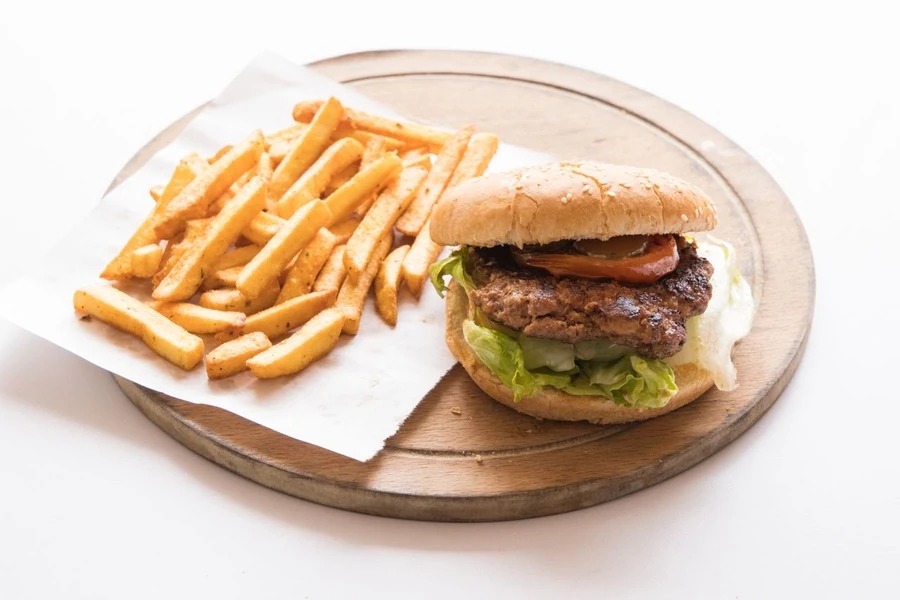
A 2019 NIH study compared an ultra-processed diet with an unprocessed one, matched for what was on offer. Photo: Engin Akyurt / Pexels
They eat mostly unprocessed food
In a tightly controlled 2019 experiment at the US National Institutes of Health, 20 adults lived in a research unit for four weeks. For two weeks they ate an ultra-processed diet and for two weeks an unprocessed one, matched for calories, sugar, fat, fibre and salt on offer, and could eat as much as they liked. On the ultra-processed diet they ate about 500 calories a day more and gained about 0.9 kg in two weeks. On the unprocessed diet they lost weight (Hall et al., 2019). They ate faster, too. Food that needs chewing slows you down.
They don't drink their calories
Sugary drinks, sweetened coffees and juice add calories without making you feel full, so people don't eat less later to make up for them. Water, tea and coffee with little or no sugar make the biggest difference for the least effort. Alcohol counts too. A pint of beer or a large glass of wine has about as many calories as a slice of cake.
Protein and fibre at meals
Protein (eggs, yoghurt, fish, chicken, lentils, beans) and fibre (vegetables, pulses, whole grains) are the most filling parts of a meal per calorie. Building meals around them is easier than counting.

About 78% of registry members eat breakfast every day. Photo: Shane Richards / Pexels
Regular meals, but not necessarily small frequent ones
About 78% of registry members eat breakfast every day. Whether breakfast itself helps is disputed, since trials that tell people to skip or eat breakfast show little difference. What does seem to help is a steady routine of meals, which avoids the ravenous grazing that follows a skipped meal. The popular advice to eat "six small meals a day" to boost metabolism isn't supported. For weight, how much you eat matters far more than how many times.
They sleep enough
In sleep-restriction experiments, people who slept less ate about 385 extra calories a day on average, without burning noticeably more (meta-analysis, 2016). Tired brains want quick energy, which usually means sugar and fat. Seven hours or more is a sensible aim.
They watch less TV
Most registry members watch less than 10 hours of television a week, well below the national average. Time on screens is time sitting, and often time snacking.
They plan for stress eating
Emotional eating is common, and willpower is unreliable when you're tired or upset. What works better is changing the setting. Keep tempting snacks out of the house or out of sight, decide in advance what to do instead when stressed (a walk, a call, a shower), and treat a lapse as a single event, not a reason to give up. Registry members who let small gains slide were more likely to regain weight.
They check their medicines
This one is rarely mentioned. Several common medicines can cause weight gain:
- some antidepressants (mirtazapine, paroxetine)
- most antipsychotics (olanzapine especially)
- steroid tablets such as prednisolone
- insulin and sulfonylureas for diabetes
- some epilepsy drugs (valproate)
- pizotifen for migraine
Often an alternative exists that is less likely to cause weight gain. Ask your doctor or pharmacist, and never stop a medicine on your own.
A myth worth dropping
"My metabolism slowed down when I hit 40" is one of the most common explanations for middle-age weight gain. A large 2021 study using precise measurements in over 6,000 people found that, after allowing for body size, metabolism barely changes from about age 20 to 60, and only declines after that (Pontzer et al., 2021). Weight gain in midlife mostly comes from moving less and eating a little more, a few dozen calories a day adding up over years. That is good news, because both can be changed.
Sources
- Wing R, Phelan S, "Long-term weight loss maintenance", The American Journal of Clinical Nutrition 82 (2005): 222S-225S. https://doi.org/10.1093/ajcn/82.1.222S
- Hall K, Ayuketah A, Brychta R, Cai H et al., "Ultra-Processed Diets Cause Excess Calorie Intake and Weight Gain: An Inpatient Randomized Controlled Trial of Ad Libitum Food Intake", Cell Metabolism 30 (2019): 67-77.e3. https://doi.org/10.1016/j.cmet.2019.05.008
- Al Khatib H, Harding S, Darzi J, Pot G, "The effects of partial sleep deprivation on energy balance: a systematic review and meta-analysis", European Journal of Clinical Nutrition 71 (2016): 614-624. https://doi.org/10.1038/ejcn.2016.201
- Pontzer H, Yamada Y, Sagayama H, Ainslie P et al., "Daily energy expenditure through the human life course", Science 373 (2021): 808-812. https://doi.org/10.1126/science.abe5017





Comments (0)
Leave a Reply
Comments are moderated. Please read our Comment Policy before posting.
Log in to post a comment.