

 Jan 19, 2025
 5 min read
Female Infertility: Causes, Tests and Treatment Options

Infertility is usually defined as not getting pregnant after a year of regular sex without contraception, or after six months for women aged 35 or over. It is far more common than most people assume. The World Health Organization estimates that about one in six people of reproductive age experience it at some point in their lives.
Before the details, one point often gets lost. A problem with sperm is part of the picture in roughly half of couples who struggle to conceive. Testing should involve both partners from the start, and a semen analysis is one of the simplest and cheapest tests in the whole process.
What causes it
The UK's national fertility guideline (NICE CG156) gives a rough breakdown of causes among couples seeking help. Male factors account for about 30%, ovulation problems 25%, damaged fallopian tubes 20%, and problems of the womb or pelvic lining 10%. About 25% have no cause found ("unexplained infertility"). In around 40% of couples more than one problem is present, which is why the figures add up to more than 100%.
Ovulation problems. Polycystic ovary syndrome (PCOS) is the most common cause. Periods that come less often than every 35 days, or not at all, are the main sign. Ovulation can also stop because of thyroid disease, a high level of the hormone prolactin, being very underweight, or heavy exercise with too little food. Some medicines raise prolactin, including several antipsychotics and the anti-sickness drugs metoclopramide and domperidone. A doctor or pharmacist can check your list.
Blocked or damaged tubes. Pelvic infections, especially untreated chlamydia and gonorrhoea, can scar the fallopian tubes. So can a previous ectopic pregnancy, a burst appendix or pelvic surgery. Chlamydia often causes no symptoms, so many women don't know they've had it.
Endometriosis. Tissue similar to the womb lining grows elsewhere in the pelvis, causing painful periods, pain during sex and scarring that can distort the tubes and ovaries.
Problems in the womb. Fibroids that bulge into the womb cavity, polyps, and scarring after surgery can interfere with implantation.
Age. The number and quality of eggs fall steadily, with a sharper decline after 35. Age also affects how well every treatment works.
The usual tests
- Is ovulation happening? A blood test for progesterone about seven days before the expected period (day 21 of a 28-day cycle) confirms it.
- Hormone tests, including FSH, LH, thyroid function and prolactin, and sometimes AMH, which estimates how many eggs remain. AMH helps plan IVF, but it is poor at predicting whether someone will conceive naturally.
- Pelvic ultrasound to look at the womb and ovaries.
- A tube test: an X-ray or ultrasound dye test (HSG or HyCoSy). If endometriosis or adhesions are suspected, a laparoscopy (keyhole surgery) is used instead.
- Semen analysis for the male partner.
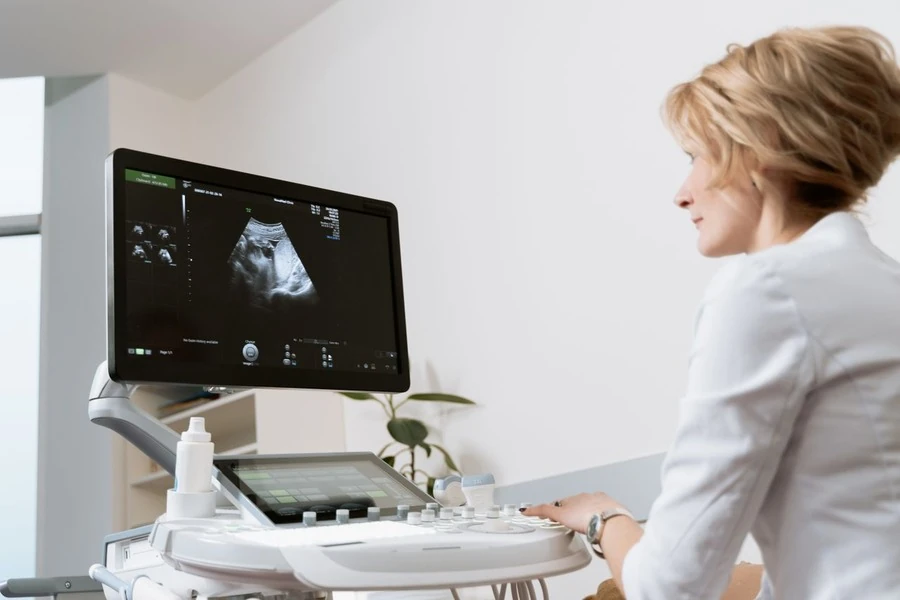
Ultrasound monitoring is advised with ovulation medicines such as letrozole. Photo: MART PRODUCTION / Pexels
Treatment depends on the cause
Medicines to trigger ovulation. For women with PCOS, letrozole is now usually preferred to the older drug clomifene. In a large 2014 trial, 27.5% of women taking letrozole had a live birth, compared with 19.1% on clomifene. Both are taken for five days early in the cycle, and ultrasound monitoring is advised because they raise the chance of twins. If tablets don't work, the next step is daily hormone injections (gonadotrophins), which need closer monitoring.
Weight change. In women with PCOS who are overweight, losing 5 to 10% of body weight often restarts ovulation by itself. In women who are underweight or over-exercising, regaining weight does the same.
Surgery. Removing polyps or fibroids from inside the womb, removing endometriosis, or repairing tubes can help selected women. Severely damaged tubes are usually better bypassed with IVF.
IUI (intrauterine insemination). Prepared sperm is placed directly in the womb around ovulation. It is mainly used with donor sperm, for same-sex couples, or when sex is difficult. It is less often recommended for unexplained infertility than it once was.
IVF. Eggs are collected after hormone stimulation, fertilised in the lab, and an embryo is placed in the womb. Success depends mainly on the woman's age. UK figures from the fertility regulator, the HFEA, show that around a third of embryo transfers lead to a birth in women under 35. At 43 to 44 it is roughly one in twenty, using the woman's own eggs.
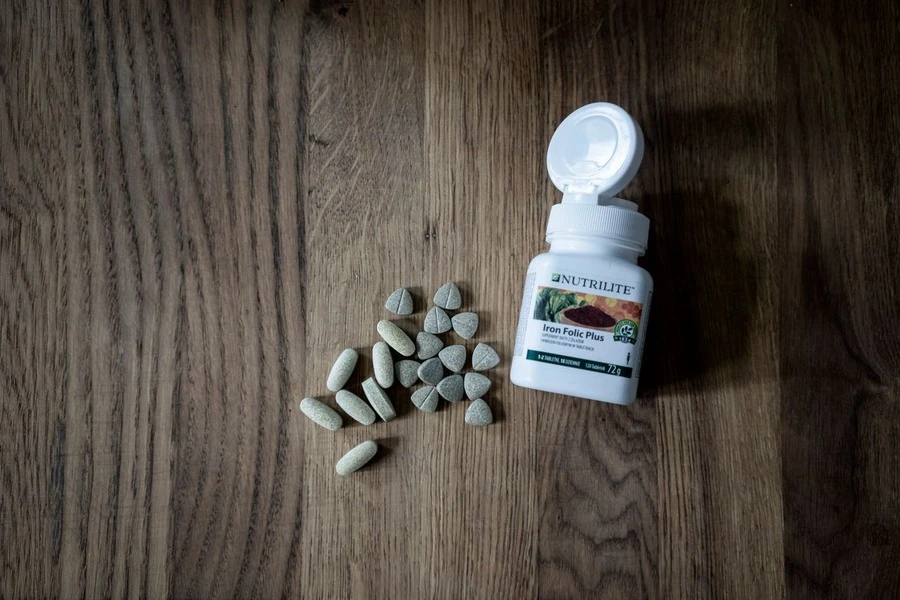
Take 400 micrograms of folic acid a day from before conception until 12 weeks of pregnancy. Photo: Mateusz Dach / Pexels
Medicines and supplements while trying
Take folic acid, 400 micrograms a day, from before conception until 12 weeks of pregnancy, to reduce the risk of spina bifida. A higher 5 mg dose is prescribed for women with diabetes, a BMI of 30 or more, a previous pregnancy affected by a neural tube defect, or who take some epilepsy medicines.
Review every regular medicine with a doctor or pharmacist before trying. Some are unsafe in early pregnancy, often before a pregnancy is even known about. These include valproate, isotretinoin, methotrexate, warfarin and blood-pressure drugs of the ACE-inhibitor type. Our article on medicines that can harm a baby in the first trimester covers these in more detail. Regular anti-inflammatory painkillers such as ibuprofen around mid-cycle may also delay ovulation in some women, so paracetamol is the better choice while trying.
When to ask for help
See a doctor after 12 months of trying, or after 6 months if you are 35 or older. Go sooner if periods are irregular or absent, if you have known endometriosis or PCOS, a past pelvic infection or pelvic surgery, have had cancer treatment, or if your partner has a known problem. The NHS infertility guide explains what to expect from a first appointment.
Infertility can be emotionally hard, and the strain often falls unevenly between partners. Fertility clinics usually offer counselling, and it is worth taking up early, not only when treatment fails.
Sources
- World Health Organization, "Infertility". https://www.who.int/news-room/fact-sheets/detail/infertility
- NICE, "Fertility problems: assessment and treatment - Guidance". https://www.nice.org.uk/guidance/cg156
- Legro R, Brzyski R, Diamond M, Coutifaris C et al., "Letrozole versus Clomiphene for Infertility in the Polycystic Ovary Syndrome", New England Journal of Medicine 371 (2014): 119-129. https://doi.org/10.1056/NEJMoa1313517
- HFEA, "In vitro fertilisation (IVF)". https://www.hfea.gov.uk/treatments/explore-all-treatments/in-vitro-fertilisation-ivf/
- NHS, "Infertility". https://www.nhs.uk/conditions/infertility/




Comments (0)
Leave a Reply
Comments are moderated. Please read our Comment Policy before posting.
Log in to post a comment.